AEPS API Software: Features, Benefits & Complete Guide
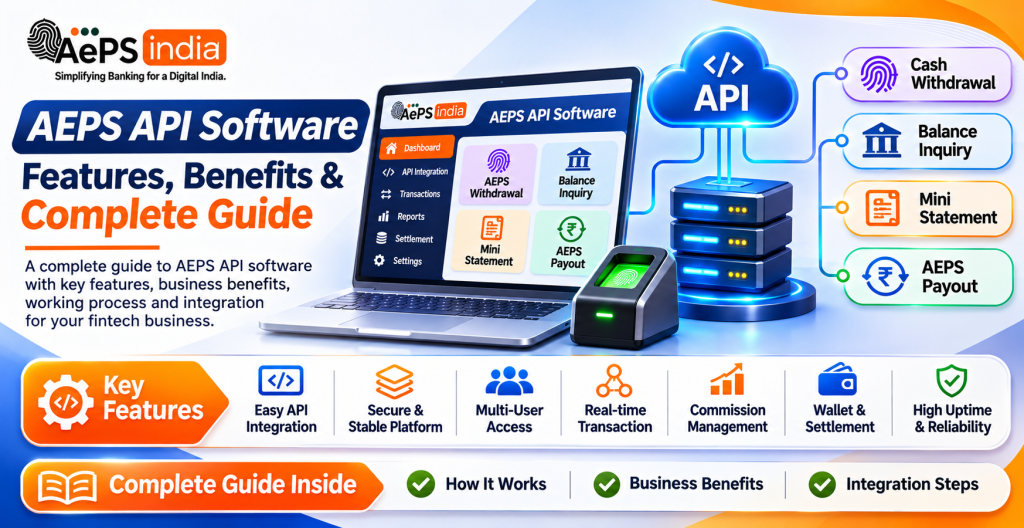
The growing demand for digital banking and financial inclusion in India has created new opportunities for fintech companies, banking service providers, retailers, and entrepreneurs. AEPS API Software plays an important role in this digital banking ecosystem by enabling businesses to integrate Aadhaar Enabled Payment System (AePS) services into their applications, websites, and fintech platforms. With the right AEPS API integration, businesses can provide essential banking facilities to customers through Aadhaar-based biometric authentication.
An AEPS API Software (Aadhaar Enabled Payment System Application Programming Interface) is a fintech interface that lets businesses integrate cardless, PIN-less, biometric-authenticated banking services into their own mobile Aeps apps, websites, or B2B Aeps panel.
AEPS API Software in India enables businesses to offer supported banking services such as cash withdrawal, balance enquiry, mini statement, and other eligible Aadhaar-enabled transactions through an integrated technology platform. It connects the business application with the relevant banking and transaction infrastructure, helping authorized Aeps india team deliver convenient banking services through assisted service points, including retail outlets and banking correspondents.
For fintech startups, distributors, retailers, and established financial service providers, choosing reliable AEPS Software is essential for building an efficient and scalable digital banking business. A professional AEPS API solution should offer easy Aeps API integration, comprehensive developer documentation, compatible certified biometric devices, secure transaction processing, real-time transaction status updates, reporting facilities, and effective technical support.
However, selecting the right AEPS API Provider in India requires more than comparing transaction charges or available features. Businesses should carefully evaluate Aeps API performance, onboarding requirements, banking connectivity, transaction success and failure handling, settlement procedures, security standards, regulatory responsibilities, and customer support before integrating any top AEPS platform.
In this complete guide, we will explore everything you need to know about AEPS API Software, including how AEPS technology works, its essential features, Aeps API integrating process, supported biometric devices, business benefits, security requirements, Aeps india selection criteria, and how fintech companies can use AEPS integration to expand their digital banking services across India.
What Is AEPS API Software?
AEPS API software is a software interface that connects apps, websites, or retail terminals to India’s Aadhaar Enabled Payment System (AePS) network managed by the National Payments Corporation of India (NPCI). It lets businesses and agents offer basic banking services using a customer’s 12-digit Aadhaar number and biometric authentication instead of a debit card or PIN.
How Does AEPS API Software Work?
AEPS (Aadhaar Enabled Payment System) API software acts as a digital bridge connecting local retail outlets to banks through the National Payments Corporation of India (NPCI). It allows merchants to offer basic banking services using a customer’s Aadhaar number and biometric authentication.
Step-by-Step Working Process
- Customer Initiation: A customer visits a retail point or Business Correspondent (BC) agent to perform a banking task. They provide their 12-digit Aadhaar number and select the name of their bank.
- Biometric Capture: The merchant uses a UIDAI-certified Aeps biometric scanner (fingerprint or iris) connected to their device. The b2b Aeps software captures the customer’s biometric data and encrypts it immediately for security.
- API Request Generation: The AEPS software packages the Aadhaar number, bank ID, transaction type, and encrypted biometric data into a secure digital request. It sends this request through the Aeps india server to the NPCI switch.
- Authentication and Routing: NPCI identifies the customer’s bank and forwards the request to them. The bank then cross-checks the Aadhaar number and biometric data against the central UIDAI (Unique Identification Authority of India) database.
- Transaction Processing: Once UIDAI confirms the identity match, the customer’s bank processes the transaction (e.g., debiting funds for a cash withdrawal). The bank sends an approval or decline message back through NPCI to the API software.
- Completion and Receipt: The Aeps merchant software displays the transaction status on the screen within seconds. For cash withdrawals, the merchant hands over the physical cash to the customer and provides a digital or printed receipt.
Essential Services Available Through AEPS API Software
AEPS (Aadhaar Enabled Payment System) API software enables businesses, fintech platforms, and banking correspondents to offer cardless, PIN-less financial transactions using a customer’s Aadhaar number and biometric authentication. Developed by the Aeps india, this Aeps admin software turns local retail shops and digital apps into interoperable micro-banking touchpoints.
Core Banking Services
These foundational transactions allow customers of any participating bank to access their accounts at local agent outlets:
- Cash Withdrawal. Customers can withdraw money directly from their Aadhaar-linked bank accounts using fingerprint or iris scans.
- Cash Deposit. Agents can accept physical cash and deposit it straight into a customer’s linked bank account.
- Balance Inquiry. Users can instantly check their current bank account balance without visiting a bank branch or ATM.
- Mini Statement. The best Aeps software generates a summary of the customer’s recent bank transactions (typically the last 5 to 10 entries).
- Aadhaar-to-Aadhaar Fund Transfer. Customers can send money between Aadhaar-linked bank accounts across the same bank or different banks.
Key Features of Advanced AEPS API Software
AEPS (Aadhaar Enabled Payment System) API software lets businesses, fintech apps, and retail agents connect to the NPCI network to offer Aadhaar-based banking services using a customer’s Aadhaar number and biometric scan.
Security & Compliance Features
- Biometric Authentication: Verifies identity via fingerprint, iris scan, or face authentication matched through UIDAI.
- End-to-End Encryption: Protects biometric templates, Aadhaar numbers, and transaction payloads in transit.
- NPCI & UIDAI Compliance: Aligns workflows, security standards, and authentication protocols with regulatory requirements.
- Cardless & PIN-Less Flow: Completes transactions without physical debit cards, passbooks, or ATM PINs.
Platform, Management & Integration Features
- REST APIs & SDKs: Provides Aeps API endpoints and mobile SDKs (such as Android) for integrating biometric scanners and banking services into web or mobile apps.
- Real-Time Processing & Alerts: Delivers instant transaction status, alerts, and automated reconciliation.
- Wallet & Settlement Management: Tracks agent wallets, liquidity, and settlements.
- Agent Onboarding & Commission Tracking: Supports KYC/agent management, role-based access, audit logs, and per-transaction commission calculation.
AEPS API Software Development Process
The AEPS (Aadhaar Enabled Payment System) API software development process involves building a secure fintech platform that connects retail agents to the banking network using Aadhaar numbers and biometric authentication. Because businesses cannot connect directly to the National Payments Corporation of India (NPCI) switch on their own, the AEPS API Software development lifecycle combines legal bank partnerships with strict hardware, security, and ledger engineering.
Phase 1: Compliance and Partnership Onboarding
Before writing code, you must establish authorized access to the banking infrastructure.
- Partner Selection. You must sign an agreement with an Aeps india.
- KYC and Verification. Submit business registration documents, director KYC, and compliance certificates to get approved.
- Sandbox Credentials. Once approved, the Aeps india provides UAT (User Acceptance Testing) credentials, Aeps API documentation, and IP whitelisting access.
Phase 2: System Architecture and Database Design
AEPS platforms handle real-time financial settlements, requiring a fault-tolerant backend architecture.
- Tech Stack Selection. Choose robust backend frameworks like Java, .NET, Python, or Node.js for high-concurrency Aeps service API handling. Use Flutter, Kotlin, or React for agent mobile Aeps app and web portals.
- Double-Entry Ledger. Design a strict wallet ledger system where every agent balance, commission payout, and settlement is derived from immutable transaction logs rather than simple balance updates.
- Role-Based Access Control. Structure multi-tier hierarchies to manage Super Distributors, Distributors, Retailers, and Aeps Admin roles with distinct commission slabs.
Phase 3: Biometric RD Service Integration
AEPS relies on UIDAI-certified biometric scanners (such as Mantra) to capture customer fingerprints or iris scans.
- RD Service Hookup. Integrate the device manufacturer’s Registered Device (RD) Service SDK into your Android Aeps app or web browser.
- Encrypted PID Data. Configure the best Aeps app to capture the encrypted Personal Identity Data (PID) block directly from the scanner. Never store, log, or cache raw biometric data on your servers.
Phase 4: Core AEPS API Integration
Connect your backend server to the Aeps API endpoints to execute core banking functions.
- Agent Onboarding APIs. Build flows for merchant e-KYC and mandatory daily Two-Factor Authentication (2FA) required by NPCI guidelines.
- Transaction Modules. Implement endpoints for Cash Withdrawal, Balance Inquiry, Mini Statement, and Aadhaar Pay.
- Reference and Callback Handling. Generate a unique internal transaction reference ID before calling the best Aeps API. Build idempotent webhook listeners and automated status-check cron jobs to resolve pending or timed-out transactions.
Phase 5: Security and UAT Sandbox Testing
Aeps b2b software must pass rigorous security checks before handling live funds.
- Payload Encryption. Implement AES/RSA encryption, digital signatures, and HTTPS/TLS protocols for all data in transit. Keep all Aeps API keys strictly on the backend server.
- Sandbox Simulation. Test all edge cases in the staging environment using dummy Aadhaar data, including low balances, biometric mismatches, bank server timeouts, and duplicate callbacks.
- Bank Certification. Submit test logs and screen recordings to your partner bank or aggregator for final UAT sign-off.
Phase 6: Production Deployment and Reconciliation
Once certified, transition the Aeps admin platform to live operations with continuous financial monitoring.
- Production Cutover. Whitelist your live server IPs, swap UAT keys for production credentials, and onboard initial retail agents.
- Automated Reconciliation. Run daily automated reconciliation scripts to match your internal ledger against bank settlement files and flag discrepancies.
- Monitoring Dashboards. Equip Aeps admin portal with real-time tracking for transaction success rates, bank downtime alerts, pending queues, and commission payouts.
AEPS API Software Pricing in India
In India, AEPS (Aadhaar Enabled Payment System) API and Aeps software cost generally range from ₹500 to ₹1,00,000+ for Aeps b2b API/white label Aeps package, while custom AEPS software development can range from ₹1,00,000 to ₹25,00,000+ depending on features, scale, and bank integration type.
1. Upfront Setup & API Integration Costs
- Basic API / White-Label Setup: Often starts between ₹500 and ₹35,000 (for example, around ₹15,000–₹20,000 one-time Aeps setup on several Aeps b2b platform, often excluding GST).
- Proper / Direct Bank-Backed API Integration: Can require significantly higher Aeps onboarding or Aeps setup fees ranging from ₹12,000 to several lakhs (e.g., ₹2,55,000 to ₹4,50,000 for certain direct Aeps bank API tiers) depending on bank tie-ups and compliance.
2. AEPS Software & Platform Costs
- Ready-Made / White-Label Software: Typically ₹35,000 to ₹1,00,000+ when bundled with admin, distributor, and Aeps retailer panel, Aeps wallet management, and Aeps commission tracking.
Custom Software Development:
- Basic customized platform: ₹1 lakh – ₹3 lakh
- White-label software build: ₹2 lakh – ₹6 lakh
- Custom web application: ₹4 lakh – ₹10 lakh
- Advanced multi-service fintech platform: ₹10 lakh – ₹25 lakh+
3. Per-Transaction & Service Charges
Pricing varies by Aeps india, service type, and transaction volume slabs:
- Cash Withdrawal: Often 0.5% to 1% (commonly capped around ₹12–₹15) or slab-based charges such as ₹0.50 – ₹1.50 per transaction.
- Balance Enquiry: Typically ₹0.10 – ₹0.25 per query.
- Mini Statement: Typically ₹0.15 – ₹0.30 per request.
- Aadhaar Pay: Typically ₹0.40 – ₹1.00 per transaction.
- AEPS eKYC: Typically ₹1.00 – ₹2.00 per verification.
4. Ongoing & Hidden Costs to Budget For
- Annual Maintenance & Hosting: Server hosting, security/compliance updates, and annual maintenance contracts (often modeled around 10%–20% of build cost per year for custom Aeps integration).
- Settlement & Payout Charges: Fees to settle wallet balances into bank accounts.
- Biometric Hardware: STQC-certified Aeps fingerprint scanners and RD (Registered Device) service renewals for agents/retailers.
- Taxes & Onboarding: GST and KYC/compliance verification costs.
AEPS API Software for Fintech Companies and Startups
An AEPS (Aadhaar Enabled Payment System) API is a software interface that lets fintech companies and startups embed Aadhaar-based, biometric banking services into their top Aeps app or web portals through the National Payments Corporation of India (NPCI) network. Customers with an Aadhaar-linked bank account can transact at agent outlets or micro-ATMs using their Aadhaar number and fingerprint or Aeps iris scan device without needing a debit card, PIN, or physical bank branch.
Key Software Components for Fintechs & Startups
Most startups pair the Aeps API integrated layer with broader platform modules:
- Agent & admin portals: Aeps Mobile apps and web dashboards for retailers, distributors, and Aeps service platform admins.
- Wallet & commission engine: Tracks balances, refunds, and tiered commissions across agents and distributors.
- Reconciliation & reporting: Logs transaction statuses, settlements, and audit trails.
AEPS API Software for Different Business Models
Aadhaar Enabled Payment System (AEPS) API software lets businesses integrate biometric Aadhaar banking such as cash withdrawals, balance inquiries, mini statements, and fund transfers into their fast Aeps platform. The right Aeps setup depends on your business model, scale, and whether you want ready made Aeps software or custom Aeps API integration.
1. Retail & Agent Model (Kirana Stores, BCs, CSCs)
- How it works: Shop owners, Business Correspondents (BCs), and Common Service Center (CSC) operators serve end customers directly using a Aeps biometric scanner device and a web or best Aeps mobile app.
- Software needs: Simple agent login, biometric device support, real time Aeps wallet balance, instant transaction receipts, and per-transaction commission tracking.
- Revenue: Per-transaction commission from Aeps india.
2. Distributor & Multi-Level Network Model
- How it works: Uses a tiered hierarchy typically Admin → Master Distributor → Distributor → Retailer → Customer—to Aeps onboard and manage field agents across regions.
- Software needs: Multi-level user Aeps panels, automated commission splits, wallet transfers between tiers, KYC approvals, and performance/settlement reports.
- Revenue: Overrides/margin spreads on transactions executed by downline retailers and distributors.
3. White-Label Fintech Model
- How it works: Businesses launch AEPS under their own brand name and domain using pre-built Aeps software supplied by a Aeps india.
- Software needs: Custom branding (logo, colors, app/web portal), admin and Aeps agent dashboard, Smooth Aeps API routing, automated settlement controls, and compliance/support tools. Aeps india outlines white label Aeps portal features including branded web and best mobile Aeps apps, multi-tier dashboards, wallet management, and commission configuration.
- Revenue: Agent Aeps onboarding fees, Aeps platform charges and commission spreads across your merchant network.
4. Custom API / SaaS Platform Model (Fintechs & Enterprises)
- How it works: Startups, payment apps, or enterprises embed AEPS mini statement API directly into their own custom Aeps application, often alongside services like BBPS, Domestic Money Transfer (DMT), micro-ATM, or payouts.
- Software needs: Clear Aadhaar Enabled Payment System API documentation, sandbox/testing environment, high uptime and multi-bank routing, reconciliation tools, and strong security/compliance. If you are evaluating Aeps API solutions directly, AEPS India covers best Aeps API integration workflows for fast mobile Aeps app and B2B Aeps portal.
- Revenue: Transaction markups, enterprise/High speed Aeps API usage fees, or cross-selling bundled financial services.
White Label AEPS Software vs AEPS API Software
White label AEPS software gives you a ready-made, branded Aeps portal and Aeps commission app to run an agent network, while AEPS API software gives you backend endpoints to plug Aadhaar-enabled banking into your own custom product.
| Feature | White Label AEPS Software | AEPS API Software |
|---|---|---|
| What you get | Ready-to-use admin panel, web portal, and mobile app under your brand. | Backend APIs, documentation, and sandbox access to integrate into your own system. |
| Branding | Full custom branding (logo, domain, app name, receipts) on a pre-built platform. | Your own existing or custom-built UI/UX. |
| Development effort | Minimal; launch quickly with configuration and KYC setup. | High; requires developers to build frontends, flows, and error handling. |
| Technical control | Limited to platform settings, roles, and commission slabs. | High control over user journeys, custom workflows, and system architecture. |
| Network hierarchy | Built-in multi-level management (super distributor, distributor, retailer). | You build or manage user hierarchies and permissions yourself. |
| Best for | Entrepreneurs and distributors launching a branded B2B agent network fast. | Fintechs, platforms, or enterprises embedding AEPS into an existing app. |
AEPS Software Admin Panel and Dashboard Features
An Aadhaar Enabled Payment System admin panel and Aeps dashboard give fintech operators, white label Aeps software owners, and banking networks centralized control over biometric banking transactions, multi-tier agent hierarchies, wallets, and commissions.
Dashboard Overview & Analytics
- Real-Time Metrics: Track total transaction volume, cash withdrawal/deposit counts, balance inquiries, mini statements, and success/failure rates at a glance.
- Network Activity: Monitor total registered agents, active retailers, and distributors along with daily/monthly revenue trends.
- Custom & Scheduled Reports: Filter logs by date, service type, or user tier, and export ledger, commission, and settlement reports.
Hierarchy & User Management
- Multi-Tier Role Control: Manage permissions and access across Aeps Admins, Master Distributors, Distributors, Retailers/CSPs, and support staff.
- Onboarding & KYC: Approve or suspend agent accounts, verify KYC documents, and track user activation status.
- Service Toggles: Enable or disable specific services (such as cash withdrawal, Aadhaar Pay, mini statements, or money transfers) per user or across the Aeps earning platform.
Wallet, Commission & Settlement Management
- Wallet & Fund Requests: Credit or debit agent wallets, approve or reject fund requests, and view real time Aeps wallet balances and transfer histories.
- Commission Slabs: Configure custom commission or surcharge slabs by transaction amount, service type, and hierarchy level.
- Payouts & Settlements: Manage automated or manual bank settlements and track payout statuses.
Security, API & Support Controls
- Transaction Auditing: Search and investigate individual biometric transactions, status updates, and failed or pending cases.
- API & Compliance: Monitor Aeps banking API uptime/activity and enforce encryption, role-based access, and regulatory compliance controls.
- Helpdesk / Ticket System: Review and resolve support tickets raised by distributors or retail agents.
AEPS API Software Security and Regulatory Compliance
AEPS (Aadhaar Enabled Payment System) API software must comply with strict technical, operational, and data-privacy frameworks governed by the Reserve Bank of India (RBI), the National Payments Corporation of India (NPCI), and the Unique Identification Authority of India (UIDAI). Because transactions rely on sensitive biometric and demographic data, platforms must implement end-to-end encryption, certified biometric hardware, and rigorous agent onboarding protocols.
Regulatory Governance & Compliance Frameworks
Operating an AEPS API platform in India requires adherence to multiple overlapping regulatory bodies:
- RBI Guidelines. The Reserve Bank of India sets overarching rules for digital payment platforms, Business Correspondent (BC) models, and KYC/AML (Know Your Customer / Anti-Money Laundering) norms. Recent RBI directions also mandate strict due diligence and continuous transaction monitoring of AEPS Touchpoint Operators (ATOs) to prevent fraud.
- NPCI Standards. The National Payments Corporation of India manages the core AEPS switching infrastructure. Aeps india must use NPCI-certified switches, follow standardized message formats (such as ISO 8583 or REST/JSON/XML bridges), and complete regular compliance self-attestations.
- UIDAI Regulations. Under the Aadhaar Act, High volume Aeps software must follow UIDAI authentication rules. High speed Aeps Platform are strictly prohibited from storing raw Aadhaar numbers or biometric templates locally and must use Aadhaar Data Vaults or tokenization where applicable.
- Data Protection Laws. Highest Volume Aeps Platform must comply with the Information Technology Act, 2000 (and its amendments) alongside the Digital Personal Data Protection (DPDP) framework to safeguard user consent and personal financial records.
Technical & Biometric Security Standards
AEPS API software protects transactions across the capture, transmission, and processing layers:
- UIDAI-Certified L1 Registered Devices (RD). Aeps Software integrate exclusively with UIDAI-approved L1 Registered Device services. L1 Aeps devices sign and encrypt biometric data inside a Trusted Execution Environment (TEE) at the hardware level before it ever reaches the host application.
- Anti-Spoofing & Liveness Detection. Modern AEPS API incorporate AI-driven liveness checks and spoof-resistant protocols to reject artificial fingerprints, silicone molds, or replay attacks.
- End-to-End Encryption (TLS 1.3). All secured Aeps API payloads traveling between merchant terminals, aggregator servers, and NPCI switches must be secured using strong transport-layer encryption such as TLS 1.3 and payload-level cryptographic signing.
- Access Controls & API Security. Production integrations require IP whitelisting, OAuth/token-based authentication, Mutual TLS (mTLS), and role-based access control (RBAC) to block unauthorized professional Aeps API calls.
Operational Controls & Fraud Prevention
Beyond Aeps software architecture, compliant real time AEPS platform enforce operational safeguards across their merchant networks:
- Strict Agent Onboarding (KYC). Before activating an Aeps API key or agent ID, operators must verify business registration (such as Udyam/MSME or GST certificates), PAN, Aadhaar, bank account details, and physical shop verification.
- Two-Factor Authentication for Agents. In addition to customer biometrics, agents must authenticate themselves daily via biometric login or OTP before initiating customer transactions.
- Real-Time Fraud Monitoring & Audit Trails. Best Aeps System must maintain immutable transaction logs with Retrieval Reference Numbers (RRNs), velocity checks, geolocation tracking, and automated alerts for unusual withdrawal patterns.
- PCI-DSS & InfoSec Audits. Aeps india undergo periodic information security audits, vulnerability assessments, and PCI-DSS or ISO 27001 certifications to ensure ongoing resilience.
AEPS API Software Testing and Performance Monitoring
AEPS API testing and performance monitoring requires validating biometric authentication, transaction accuracy, and real-time bank switch latency before and after deployment. Because AEPS relies on live UIDAI biometric verification and NPCI banking switches, thorough sandbox testing and continuous production observability prevent financial discrepancies and transaction timeouts.
1. Pre-Deployment AEPS API Testing
Before moving to production credentials, test both normal banking workflows and edge-case failure states in a dedicated AEPS sandbox environment.
- Biometric Device & RD Service Integration. Verify that the High performance Aeps software captures encrypted PID (Personal Identity Data) blocks from UIDAI-certified scanners (such as Mantra) across web and mobile interfaces.
- Core Transaction Flows. Validate end-to-end execution for cash withdrawals, balance inquiries, mini-statements, and Aadhaar Pay transactions.
- Edge Cases & Exception Handling. Simulate Aeps cash withdrawal API timeouts, network drops, duplicate request IDs, and pending transaction statuses to ensure your system triggers automated reversals without double-debiting customer accounts.
- Financial & Ledger Accuracy. Audit automated wallet debits, retailer/distributor commission splits, and end-of-day reconciliation logs against mock bank responses.
- Security & NPCI Compliance. Enforce HTTPS/TLS encryption, two-factor authentication (2FA) for agents, rate limiting, and strict input validation.
2. Performance & Load Testing
Standard Aeps API testing verifies functional correctness, while Aeps API performance testing ensures your middleware remains fast and stable during peak banking hours.
| Test Type | Objective for AEPS Systems | Key Metrics to Track |
|---|---|---|
| Load Testing | Measures API responsiveness under expected daily retailer traffic. | Average response time, p95/p99 latency. |
| Stress & Spike Testing | Tests system behavior during sudden surges, such as government DBT (Direct Benefit Transfer) payout days. | Error rates, HTTP 5xx timeouts, queue backlogs. |
| Soak Testing | Runs sustained transaction volume over hours to catch memory leaks or database connection exhaustion. | CPU/memory saturation, database lock times. |
3. Production Performance Monitoring
Once live, continuous Aeps API monitoring helps detect bank-side slowdowns and failed settlements in real time.
- Real-Time Transaction Success Rates. Track HTTP status codes and NPCI response codes by issuing bank to quickly spot when a specific bank server is down or degrading.
- Synthetic Health Checks. Schedule automated synthetic Aeps Balance Enquiry API pings to verify gateway uptime, SSL certificate validity, and authentication endpoints every few minutes.
- Infrastructure & Database Observability. Monitor load balancers, Aeps API gateways, and ledger databases simultaneously so you can isolate whether latency stems from your internal server or an upstream Aeps india.
- Automated Reconciliation & Alerts. Set up real-time alerts for anomalous failure spikes, unmatched settlement records, and suspicious agent activity to meet compliance and audit requirements.
Benefits of Using AEPS API Software
AEPS (Aadhaar Enabled Payment System) API software allows fintech companies, retailers, and digital Aeps platform to integrate Aadhaar-based banking services directly into their Aeps apps or websites. By connecting to the National Payments Corporation of India (NPCI) network, the software enables secure, cardless, and PIN-less transactions using only a customer’s Aadhaar number and biometric verification.
Key Benefits for Businesses & Fintechs
- New Revenue Streams: Businesses and retail agents earn commissions on every successful cash withdrawal, deposit, or fund transfer processed through the High commission Aeps platform.
- Low Infrastructure Cost: Companies can turn existing top Aeps mobile app, web portals, or local retail stores into virtual micro-ATMs without investing in expensive Micro ATM hardware.
- Increased Store Footfall: Aeps india offering essential banking services attracts more walk-in customers to local shops, boosting cross-selling opportunities for other retail goods or digital services like bill payments and mobile recharges.
- Automated Operations & Management: Most AEPS API software includes Aeps admin dashboard for real-time transaction tracking, automated commission distribution, instant settlements (T+0/T+1), and multi-tier distributor/retailer management.
- Easy Scalability: Well-documented Aeps API integrate quickly into existing digital wallets or Aeps B2B portal, allowing Seamless Aeps platform to handle high transaction volumes effortlessly.
Key Benefits for Customers
- Cardless and PIN-less Convenience: Customers do not need debit cards, smartphones, or secret PINs to access their bank accounts, which eliminates failed transactions caused by forgotten passwords.
- Multi-Bank Interoperability: A single AEPS touchpoint allows users to transact across any participating bank in India, regardless of which bank holds their account.
- Financial Inclusion in Rural Areas: Residents in remote or underserved areas can check balances, get mini-statements, and withdraw cash locally without traveling long distances to a bank branch.
- Seamless Government Benefit Access: Beneficiaries can easily withdraw Direct Benefit Transfers (DBT), pensions, and subsidies (such as NREGA wages) directly at neighborhood service points.
Security & Compliance Advantages
- Biometric Fraud Prevention: Transactions require live fingerprint or iris scans verified against UIDAI records, making them significantly more secure against skimming or identity theft than traditional magnetic-stripe cards.
- Regulatory Alignment: Reputable AEPS API operate with end-to-end encryption and adhere strictly to RBI, NPCI, and UIDAI security guidelines.
Aeps india One of The Best AEPS API Software Provider in India
Aeps india only one of the best AEPS (Aadhaar Enabled Payment System) API software provider requires balancing regulatory compliance, technical reliability, and operational payouts. A high Aeps commission structure cannot make up for frequent transaction failures or slow settlements.
Evaluate Aeps india across these core areas before committing to an integration:
Compliance & Banking Infrastructure
- NPCI and RBI Authorization. Verify that the Aeps india is directly certified or operates through an authorized banking partner regulated by the National Payments Corporation of India (NPCI) and the Reserve Bank of India (RBI). Ask for clear details on their sponsoring bank tie-up and business registration.
- Multi-Bank Connectivity. Ensure the Aeps API support a wide network of participating banks. Multi-bank routing helps redirect transactions automatically if a primary bank server goes down.
- Data Security and Biometrics. Confirm that the system uses end-to-end encryption for data in transit and at rest. The Aadhaar Enabled Payment System API must exclusively support UIDAI-certified Registered Device (RD) biometric scanners (fingerprint and iris).
Technical Performance & Integration
- Transaction Success Rate and Uptime. Look beyond promotional success-rate numbers and evaluate real-world server stability. High Aeps API uptime prevents customer drop-offs during peak hours.
- Developer Documentation and Sandbox. Check for clean, well-structured Aeps API documentation and a testing sandbox environment. A good sandbox lets your developers simulate transactions and verify biometric device compatibility before going live.
- Error Handling and Webhooks. Aeps india real-time webhooks and clear status codes for pending, failed, timed-out, and reversed transactions. Transparent status tracking prevents manual reconciliation headaches.
Software Features & Scalability
- Role-Based Portals. If you need a complete Aeps software solution rather than just raw Aeps Fund Transfer API, check for ready made Aeps admin, distributor, and Aeps retailer panel. These should include customizable Aeps commission slabs and detailed ledger reporting.
- Value-Added Services. Look for Aeps india that bundle AEPS with complementary cutomized Aeps API like Domestic Money Transfer (DMT), Bharat Bill Payment System (BBPS), Micro ATM Software, and mobile recharges. Offering multiple services increases retailer retention on your Aadhaar Enabled Payment System platform.
- White-Label and Custom Branding. If you are building your own B2B fintech brand, confirm whether the custom Aeps software support custom domains, logos, and role-based workflows.
Financials & Ongoing Support
- Settlement Speed. Analyze the Aeps payout and Aeps wallet settlement cycles. Instant or same-day settlements ensure your retailers maintain steady working capital and liquidity.
- Transparent Pricing and Commissions. Compare Aeps setup cost, AEPS API Integration Service fees, and per-transaction commission structures. Watch out for hidden maintenance fees or rigid minimum volume commitments.
- 24/7 Technical Support. Verify the availability and responsiveness of their technical support team. Payment glitches require immediate resolution to maintain trust with your agents and end customers.
Why Choose Aeps india for AEPS API Software Solution
Aeps india for an AePS (Aadhaar Enabled Payment System) API software solution allows fintech businesses, B2B Aeps platforms, and local service networks to offer biometric, cardless banking services without building complex banking infrastructure from scratch.
Key Reasons to Choose an AePS API Software Provider
- Ready-Made Banking & NPCI Connectivity: The Aeps india connects your platform directly to the NPCI (National Payments Corporation of India) and banking switches, enabling real-time services like cash withdrawals, balance enquiries, mini statements, and Aadhaar-to-Aadhaar fund transfers.
- Time and Cost Efficiency: Building secure core-banking connections, compliance measures, and reconciliation modules internally requires massive capital and technical resources. Aeps india supplies plug-and-play REST Aeps API, SDKs, and Aeps developer documentation to launch quickly.
- White-Label Solutions: Aeps india offer white label Aeps platforms, allowing you to run the digital banking service under your own brand name, custom logo, and domain while managing your own retailer and distributor network.
- Built-In Security & Biometric Compliance: Best AePS relies on sensitive Aadhaar fingerprint and OTP authentication. Aeps india handle 2-factor authentication, SSL encryption, and fraud-protection systems to maintain safety standards.
- High Uptime and Routing Switches: Aeps india utilize multi-bank routing switches to ensure high transaction success rates and system uptime (often 99%+), preventing failed customer transactions at local touchpoints.
- Commission & Network Management: A complete AePS payment software panel gives you built-in tools for real-time commission tracking, distributor/retailer hierarchy management, and automated transaction reconciliation.
- Multi-Service Ecosystem Integration: Aeps india allow you to bundle AePS with other utilities like Micro-ATMs, Domestic Money Transfers (DMT), Best BBPS (bill payments), and mobile recharges on a single Aeps dashboard.
Conclusion
Choosing the right AEPS API Software is an important decision for fintech companies, banking service providers, distributors, and businesses looking to expand their digital banking operations in India. A reliable Aadhaar Enabled Payment System solution can help businesses connect customers with essential banking services, including cash withdrawals, balance enquiries, mini statements, cash deposits, and other supported Aadhaar-based banking transactions.
The best AEPS API Software is not simply a platform that processes transactions. It should offer a well documented Aeps API, seamless integration, compatible biometric devices, secure authentication, real-time transaction status updates, transparent settlement and reconciliation, detailed reporting, and dependable technical support. These capabilities help businesses manage their retailer networks, improve operational efficiency, and deliver a better banking experience to customers.
AEPS (Aadhaar Enabled Payment System) API software lets top Aeps apps, websites, and Aeps retail platform connect to NPCI’s Aadhaar-based payment network for cardless cash withdrawals, balance inquiries, mini statements, and Aadhaar Pay using a 12-digit Aadhaar number and biometric fingerprint verification.
Whether you are launching a new Aeps fintech platform, expanding an existing B2B or B2C business, building AEPS retailer network, or integrating Aadhaar-enabled banking services into best Aeps application, selecting the right AEPS API integration partner can make a significant difference to your business operations.
Before choosing an Aeps india is an AEPS software provider in India, carefully evaluate its banking partnerships, authorization and onboarding process, fast Aeps API documentation, security framework, transaction handling, pricing structure, settlement policies, and after-sales support. Also ensure that your implementation follows the applicable NPCI, RBI, UIDAI, and data protection requirements.
Ultimately, investing in reliable AEPS API Software can help your business build a scalable digital Aeps banking platform, serve customers across urban and rural India, strengthen your fintech service portfolio, and create new opportunities in India’s growing digital financial services ecosystem.
If you are planning to start or expand your AEPS business, explore an AEPS API Software solution that matches your technical requirements, business model, compliance responsibilities, and long-term growth objectives. Choose a solution that prioritizes security, transparency, reliability, and customer trust.
AEPS API Software with Aeps India
Looking for reliable AEPS API Software for your fintech or digital banking business? Aeps India offers AEPS API solutions to help businesses integrate Aadhaar-enabled banking services, biometric authentication, balance enquiry, cash withdrawal, mini statements and transaction management. Contact our team to discuss API integration, software features, pricing and onboarding requirements.
Frequently Asked Questions About AEPS API Software
AEPS API Software is a technology solution that allows businesses to integrate Aadhaar Enabled Payment System services into their websites, mobile applications, fintech platforms, and retailer software through API connectivity.
Depending on the Aeps india and applicable banking arrangements, supported services may include cash withdrawal, balance enquiry, mini statement, and Aadhaar Pay.
Yes. Eligible fintech startups can use AEPS API integration to add supported Aadhaar-enabled banking services to their applications, subject to applicable onboarding and authorization requirements.
Yes. AEPS functionality can be integrated into an existing application if the application architecture, Aeps india, security requirements, and supported biometric device workflow are compatible.
Requirements vary by Aeps india. They may include business registration documents, PAN, owner or authorized signatory KYC, bank details, and other compliance documentation.
AEPS transactions generally use compatible certified biometric devices supporting applicable UIDAI Registered Device (RD) services. Device compatibility should be confirmed with the Aeps india.
Biometric authentication is central to standard AEPS transactions. The supported biometric method and device requirements depend on the applicable authentication framework and service implementation.
Aeps india offer access to multiple participating banks through its authorized banking arrangements. Confirm the actual supported bank coverage before integration.
Pricing depends on the Aeps india, integration requirements, transaction volume, platform fees, support, and other commercial terms. Request a customized quotation before purchasing.
Security depends on the complete implementation, Aeps india infrastructure, biometric authentication arrangements, credential protection, encryption, access controls, and applicable compliance practices.
Eligible businesses may operate commission-based retailer or distributor models where permitted by their commercial and banking arrangements. Commission rates and settlement terms vary by Aeps india.
Yes. AEPS functionality can be integrated with retailer and distributor management systems to support role-based access, transaction monitoring, reports, and applicable commission management.
Aeps india authorization arrangements, API documentation, supported banking services, biometric device compatibility, security practices, transaction handling, settlement, pricing, and support.
The hosting requirements depend on the API architecture and Aeps india. Some integrations require your own backend infrastructure, while others offer managed platform services.
Ask the Aeps india whether a sandbox or testing environment is available. Testing should cover successful, failed, pending, duplicate, and reversed transaction scenarios.
AEPS enables supported Aadhaar-based banking transactions through authorized assisted service points, while traditional ATM banking generally uses an ATM card and associated authentication methods.
It can be a useful technology option for eligible businesses that want to offer assisted banking services. However, success depends on authorization, business planning, Aeps india selection, retailer demand, security, and operational management.
Buy Aadhaar eKYC Verification API in India for Secure Digital KYC & Customer Verification

AEPS Full Form – Aadhaar Enabled Payment System: Meaning, Uses, Benefits & How It Works
Best AEPS App for Cash Withdrawal and Balance Inquiry
About Author

