Micro ATM Software Development Company in India – Features, Cost & Benefits
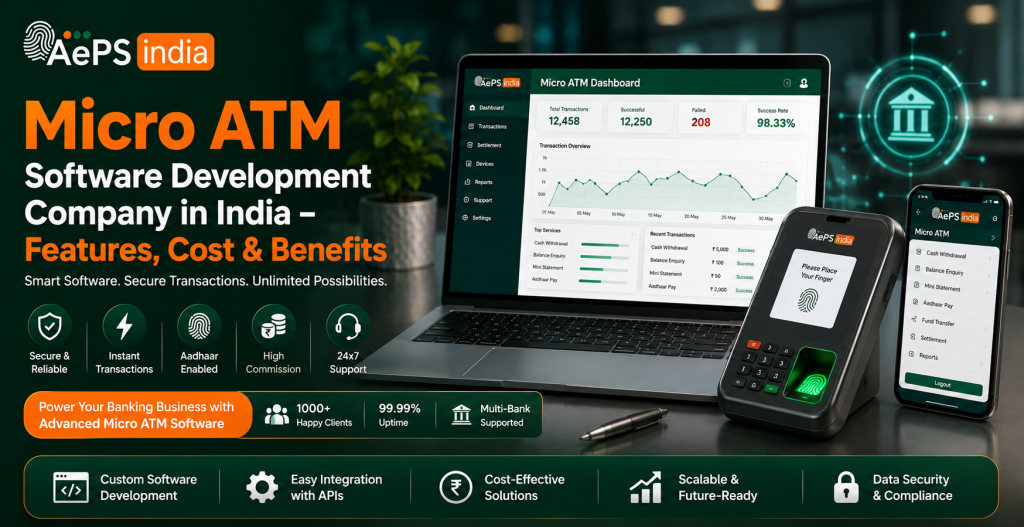
The demand for Micro ATM Software is growing rapidly across India as digital banking and financial inclusion continue to expand. Banks, fintech companies, business correspondents (BCs), retailers, distributors, and entrepreneurs are looking for reliable Micro ATM Software Development Companies to launch secure, scalable, and feature-rich digital banking platforms. A modern Micro ATM solution allows businesses to provide essential banking services such as cash withdrawal, balance enquiry, mini statement, Aadhaar Enabled Payment System (AEPS), and fund transfer through a single platform.
Micro ATM software development creates secure, custom mobile or web applications that connect with portable, handheld POS devices via Bluetooth. These micro Atm solutions enable retail agents to process banking transactions such as cash withdrawals via debit cards and Aadhaar-based fingerprint scanning (AePS) balance inquiries, and mini-statements directly from their shops.
Micro ATM software transforms handheld POS devices and smartphones into portable banking outlets. It enables local merchants and agents to provide essential services such as debit card cash withdrawals, Aadhaar-based (AePS) transactions, balance inquiries, and mini-statements. Costs for custom, white-label solutions often start at ₹3 Lakh depending on the developer.
Choosing the right Micro ATM Software Development Company in India is essential for building a successful digital banking business. A professional Micro ATM software solution offers secure micro Atm API integration, real-time transaction processing, biometric authentication support, retailer and distributor management, commission management, wallet management, settlement reports, and an easy-to-use micro Atm admin panel. These features help businesses deliver fast, secure, and reliable banking services while improving operational efficiency.
One of the biggest advantages of investing in Micro ATM Software Development is the ability to serve customers in both rural and urban areas without requiring them to visit a bank branch for basic banking services. This improves financial accessibility, increases customer trust, and creates additional earning opportunities for retailers, BC agents, and fintech businesses.
AEPS India provides advanced Micro ATM Software Development Solutions tailored to the needs of modern digital banking businesses. Our fast micro Atm platform is built with secure technology, scalable architecture, seamless micro Atm API integration, real-time transaction monitoring, and dedicated technical support to help businesses launch and manage their Micro ATM network with confidence.
In this comprehensive guide, you will learn everything about Micro ATM Software Development in India, including its key features, development cost, business benefits, essential modules, integration process, and the factors to consider when Aeps india is the best Micro ATM software provider for long-term business growth.
What Is Micro ATM Software Development?
Micro ATM software development creates the operating systems and applications that transform portable Point-of-Sale (POS) hardware and mobile devices into mini bank branches. This allows banking agents to process essential transactions such as cash withdrawals, deposits, balance inquiries, and mini statements using debit cards or biometric Aadhaar authentication.
Micro ATM Software Work
Micro ATM software combines a handheld POS device and a biometric scanner to process secure banking transactions over mobile internet. It authorizes transactions via either a standard Debit Card and PIN or an Aadhaar fingerprint scan (AePS), enabling rural agents and merchants to function as mini banking branches.
How the Transaction Workflow Operates
- Connection & Initiation: An authorized agent or Business Correspondent (BC) opens the Micro ATM mobile application on their smartphone and connects the handheld POS hardware via Bluetooth.
- Customer Authentication: The customer inserts, swipes, or taps their RuPay, Visa, or Mastercard debit card into the reader and enters their 4-digit PIN. Alternatively, the software supports cardless AePS transactions by scanning the customer’s fingerprint and entering their 12-digit Aadhaar number.
- Encryption & Transmission: The best Micro ATM software securely encrypts the transaction details and transmits them over standard mobile data (GPRS/Wi-Fi) to the banking network.
- Processing & Settlement: The bank’s Core Banking System (CBS) and the National Payments Corporation of India verify the PIN or biometric data. Once validated, the funds are deducted from the customer’s account and instantly settled in the agent’s account.
- Confirmation: The top Micro ATM software displays a success message, triggers the printing of a receipt, and records the agent’s commission.
Types of Services Offered Through Micro ATM Software
Fast Micro ATM software empowers local merchants and banking correspondents to act as mini-bank branches. Through mPOS (Mobile Point of Sale) hardware, it facilitates essential financial transactions including cash withdrawals, cash deposits, fund transfers, balance inquiries, mini-statements, and utility bill payments.
Modern Micro ATM solutions offer a comprehensive suite of services that connect rural and semi-urban populations to mainstream banking. These services are categorized into core financial services, authentication-based features, and utility/financial products:
1. Core Banking & Financial Services
- Cash Withdrawals & Deposits: Customers can use domestic debit or credit cards (RuPay, Visa, MasterCard) to withdraw and deposit cash instantly.
- Aadhaar-Enabled Payment System (AePS): Allows customers to withdraw cash, check balances, or transfer funds using just their Aadhaar number and biometric fingerprint scanning, without needing a physical card.
- Fund Transfers: Direct peer-to-peer transfers or account-to-account money transfers.
- Balance Inquiry & Mini-Statements: Quick checking of available account balances and printing or viewing recent transaction logs.
2. e-Governance & Benefit Disbursements
- Direct Benefit Transfers (DBT): Streamlines the secure distribution of government subsidies, pensions, and welfare funds directly to beneficiaries’ accounts.
- eKYC Authentication: Facilitates instant digital account opening and identity verification for various banking and telecom services.
3. Utility & Digital Payments
- Utility Bill & EMI Payments: Seamless payment processing for electricity, water, gas, broadband, and loan EMIs.
- Recharges & Wallet Loads: Pre-paid mobile, DTH, and Fastag recharges, alongside loading funds into various digital wallets.
- Financial Inclusion Products: Many advanced micro Atm software now integrate services for micro-investments, applying for small-ticket loans, and paying insurance premiums.
4. Agent & Merchant Tools
- Real-Time Settlement & Tracking: Enables agents to monitor transaction history, ledger balances, and track commissions per transaction.
- Receipt Generation: Capability to generate and print electronic receipts (or send them via SMS) for customer trust and transparency.
Why Businesses Need a Micro ATM Software Development Company
Businesses need a Micro ATM software development company (Aeps india) to build scalable, compliant, and white-labeled transaction micro Atm platforms. This technology transforms local stores into mini-banking hubs by processing card payments, Aadhaar-based withdrawals (AePS), and balance inquiries without the massive overhead of traditional ATMs.
Partnering with a specialized Micro ATM software development company provides several strategic advantages:
- Customized Revenue Streams: Tailor micro Atm commission structures, merchant margins, and agent payout rules specific to your business model.
- Regulatory Compliance: Ensure best Micro ATM platform meets strict financial standards like PCI-DSS, end-to-end encryption, and UIDAI-approved biometric authentication.
- Seamless Integrations: Enable flawless communication between handheld POS devices your Aeps admin portal, and core Aeps banking API.
- Agent Management Systems: Get built-in tools to Micro ATM onboard field agents, track real-time transactions, and manage liquidity settlements on a centralized dashboard.
- Increased Retail Footfall: Drive more daily customers to physical storefronts by providing crucial last-mile financial services to unbanked or underbanked populations.
Features Micro ATM Software Development
Top Micro ATM software development transforms portable POS hardware into mini banking outlets. It enables agents to process Aadhaar-based payments (AePS), debit card withdrawals, balance inquiries, and mini statements using biometric scanners and Bluetooth connectivity. Custom micro Atm solutions feature multi-device compatibility, real-time commission tracking, and strict security compliance.
A robust Micro ATM software application requires core features tailored for both end-users (customers) and administrators (agents/fintech operators).
Essential features and capabilities of a robust Micro ATM software solution include:
1. Core Banking Operations
- Card & Aadhaar Support: Process transactions via physical debit/credit cards (using magnetic stripe or EMV chip) or Aadhaar numbers.
- Aadhaar-Enabled Payment System (AePS): Facilitates biometric-based cash withdrawals, balance checks, and fund transfers using only a fingerprint.
- Mini Statements: Allows customers to quickly retrieve a summary of their most recent account activities.
- E-Receipts: Generates electronic transaction slips sent via SMS or email, with options to link to portable Bluetooth thermal printers.
2. Agent & Merchant Management
- Real-Time Settlements: Automates instantaneous payment clearing, micro Atm agent commission distribution, and transparent ledger maintenance per transaction.
- Custom Dashboards: Provides agents and administrators with comprehensive tracking for transaction history, daily earnings, and operational health.
- Multi-Device Support: Compatible across multiple micro Atm platforms (Android/iOS/Web) and connects via Bluetooth to portable mPOS terminals.
- Agent Onboarding (KYC): Enables streamlined digital enrollment and document verification for Banking Correspondents (BCs) and merchants.
3. Security & Compliance
- Biometric Authentication: Integrates with STQC-certified biometric scanners (Level 0 and Level 1) compliant with UIDAI standards to prevent spoofing.
- PCI-PED Compliance: Ensures secure PIN entry through hardware-encrypted PIN pads on physical mPOS or terminal devices.
- Encryption: Implements end-to-end data encryption (E2EE) and tokenization to safeguard sensitive banking and personal data.
4. Technical Flexibility
- Multi-Device Compatibility: Operates seamlessly across Android, iOS, and Web platforms. The professional micro Atm software connects directly via Bluetooth to mPOS or integrated biometric devices.
- Offline Functionality: Supports offline/store-and-forward transaction queues, allowing agents to collect and process data in areas with poor internet connectivity.
- GPS Tracking: Tracks agent deployment locations and device usage in real-time to monitor market penetration.
Benefits Micro ATM Software Development
Micro ATM software development transforms smartphones and portable POS devices into mini banking outlets. It enables retailers and Business Correspondents (BCs) to offer essential services like Aadhaar-based withdrawals (AePS), card transactions, and bill payments. Key benefits include extra revenue from commissions, increased foot traffic, and minimal setup costs.
Developing a custom Micro ATM solution offers several strategic and operational advantages for fintechs and banking agents:
- New Revenue Streams & Higher Foot Traffic: Agents earn competitive commission margins on every cash withdrawal, balance inquiry, and mini-statement processed. Providing these essential financial services attracts more customers, which translates directly into higher sales for primary retail goods.
- Cost-Effective Setup: Unlike traditional ATMs, Fast Micro ATM software runs on standard mobile phones or basic Bluetooth-enabled POS devices, significantly lowering upfront hardware and real estate investments.
- Financial Inclusion in Remote Areas: These micro Atm software solutions expand banking access into semi-urban and rural areas where traditional bank branches and physical ATMs are scarce.
- Dual Functionality: The best micro Atm system operates as both an ATM and a standard Point-of-Sale (POS) terminal, allowing merchants to easily accept digital payments (like UPI or debit cards) for their own retail products.
- Better Cash Management: For retailers, dispensing cash to customers from their register offloads excess physical cash. This reduces the security risks and costs associated with frequent, manual bank deposits.
- Enhanced Agent Tools: Custom Micro ATM development allows Aeps india to integrate valuable management features, including real-time micro Atm agent onboarding, multi-device hardware compatibility, GPS tracking, and customized commission reports.
Micro ATM vs AePS — What’s the Difference?
The primary difference is the authentication method: Micro ATM processes transactions using a physical debit card and a four-digit PIN, whereas AePS (Aadhaar Enabled Payment System) relies entirely on your 12-digit Aadhaar number and a biometric fingerprint or iris scan to verify your identity.
While both systems are designed for last-mile banking through local business correspondents, they serve slightly different customer needs and operational setups:
- Authentication & Cards: Micro ATMs require a physical bank-issued card, while AePS is strictly cardless.
- Device Requirements: Micro ATMs utilize a card-swipe/chip reader machine with a keypad. AePS requires a device connected to or featuring a biometric fingerprint/iris scanner mantra.
- Usage & Limits: Micro ATMs offer higher daily transaction limits and mirror traditional Micro ATM operations. AePS is tailored for financial inclusion, requiring users to authenticate with their Aadhaar-linked bank accounts without needing to remember an account number or PIN Mantra.
- Common Services: Both micro Atm systems allow you to check your balance, withdraw cash, and transfer money securely.
Micro ATM Software Development Cost in India
Micro ATM software development costs in India range from ₹15,000 for standard white-label solutions to over ₹15 Lakhs for custom Micro ATM API-driven systems. Development is categorized into White-label Micro ATM (₹15,000 – ₹50,000), Custom Micro ATM Software Development (₹3 Lakhs – ₹15 Lakhs), and Hardware costs (₹10,000 – ₹15,000 per device).
Cost Breakdown & Tiers
White-Label / Standard Setup:
- Cost: ₹15,000 to ₹50,000.
- Features: Pre-built Aeps india Micro ATM Solutions software platforms, Micro ATM administrative panels and basic transaction modules.
- Additional Costs: Annual Maintenance Charges (AMC) typically range from ₹10,000 to ₹30,000.
Custom Software Development (Greenfield):
- Cost: ₹3 Lakhs to ₹15+ Lakhs.
- Features: Custom Micro ATM API development, multi-tenant architecture, specific banking gateway integrations (e.g., direct NPCI/bank APIs), and advanced reporting.
Hardware (Device Integration):
- Cost: ₹10,000 to ₹15,000 per physical Micro ATM POS terminal.
- Accessories: L1 Aeps biometric scanners (like Mantra) cost an additional ₹1,500 to ₹3,000.
Factors That Affect Micro ATM Software Development Cost
Micro ATM software development costs typically range from $10,000 to over $100,000. The final budget is driven by the number of hardware integrations, the complexity of security requirements, and whether the system is custom-built or utilizes existing micro ATM APIs.
Here are the core factors that impact your micro ATM software development cost:
1. Hardware Integration
Micro ATMs interact with physical devices (card readers, biometric scanners, thermal printers).
- Pre-integrated Devices: Using established device APIs reduces development hours.
- Custom Hardware: Building custom drivers for proprietary or unique Point of Sale (POS) hardware increases your best micro ATM software development expenses.
2. Regulatory Compliance & Security
Because you are handling financial transactions, the software must adhere to stringent industry guidelines.
- Encryption Standards: The modern micro ATM software must use advanced end-to-end encryption to securely process PINs and biometric data.
- Compliance Checks: Ensuring the branded micro ATM software passes strict banking and local regulatory audits (such as RBI and UIDAI standards in India) requires specialized testing that raises the overall budget.
3. Core Features & Complexity
The software feature list heavily influences development hours:
- Basic ($10k – $50k): Cash withdrawals, balance inquiries, PIN verification, and receipt printing.
- Intermediate ($50k – $75k): Multi-language support, Aadhaar-enabled Payment Systems (AEPS), and digital wallet integration.
- Advanced ($75k – $100k+): Multi-factor biometric authentication, offline transaction caching, real-time fraud detection, and remote monitoring.
4. Third-Party Integrations
Connecting your software to the broader financial ecosystem is critical.
- Payment Gateways: Integrating with major banking networks, UPI APIs, and core banking systems (CBS).
- Middleware: Additional costs are incurred to build or license secure middleware that translates your micro ATM data into legacy banking formats.
5. UI/UX Design
Micro Atm software Designing an intuitive interface that is easy for rural customers and merchants to navigate:
- Custom UI: Tailoring the user journey, animations, and branding increases the initial design cost.
- Templated UI: Utilizing pre-built components significantly lowers front-end development costs.
6. Development Team & Location
The geographic location and expertise level of your development partner will alter your cost:
- Outsourced Teams: Top Micro Atm Software Development rates vary significantly by region.
- In-House Teams: Building an in-house team requires additional recruiting, training, and infrastructure expenses.
7. Deployment and Backend Support
Moving the micro ATM software from a micro ATM APP development environment to a live server comes with setup and recurring costs:
- Cloud Infrastructure: Hosting the backend on secure cloud servers.
- Maintenance: Routine security patching, bug fixes, and regulatory updates.
How to Choose the Best Micro ATM Software Development Company in India
Aeps india one of the best Micro ATM software development company in India, prioritize regulatory compliance, transaction success rates, and seamless settlement speeds to build trust and profitability.
Evaluate potential vendors across these key factors:
- Security & Regulatory Compliance: Ensure the Aeps india provide micro Atm software strictly adheres to Reserve Bank of India (RBI), National Payments Corporation of India (NPCI), and UIDAI mandates. The micro Atm platform should utilize end-to-end encryption and STQC-certified Registered Devices (RD) to protect sensitive biometric and card data.
- Uptime & Transaction Speed: Downtime costs revenue. Look for Aeps india that guarantee near-perfect uptime (e.g., 99.9%) and maintain high success rates, especially when processing transactions on low-bandwidth networks.
- Settlement Speed (Liquidity): To prevent blocked working capital, verify that the Aeps india offers instant or same-day (𝑻+𝟎) fund settlements directly to agent wallets or bank accounts.
- Hardware Interoperability & Portability: The micro Atm software must integrate seamlessly with various wireless/Bluetooth micro-POS devices and support both biometric (AEPS) and card-based transactions.
- White-Labeling & Customization: Aeps india developers that provide white label micro Atm solutions, enabling you to brand micro Atm software, mobile micro Atm apps, and micro Atm agent portals under your own business name.
- Multi-Service Ecosystem: Aeps india offering an interconnected service ecosystem. Advanced APIs should allow you to scale your business by adding interconnected tools like Bharat Bill Payment System, Domestic Money Transfer, and recharges.
- Technical Support & Usability: Your agents and kiosks may operate extended hours. Look for Aeps india that provide dedicated support, user-friendly dashboards, and automated commission management.
Why Choose Noble Web Studio for Micro ATM Software Development?
Partnering with a specialized Aeps india for Micro ATM software development transforms retail stores into digital banking outlets. Key advantages include accelerated time-to-market, regulatory compliance (e.g., PCI-DSS, EMV, Aadhaar), and built-in support for multiple hardware devices (PAX, Ingenico) and services like AePS.
Choosing a dedicated Micro ATM software provider ensures your business unlocks several core benefits:
- Rapid Deployment: Aeps india accelerates development time, enabling full API and system integration in just 5–7 business days using developer sandboxes.
- Regulatory Compliance: Navigating strict financial standards like PCI-DSS, EMV, and Aadhaar authentication protocols is built-in, protecting customer data and adhering to banking mandates.
- Comprehensive Transaction Support: Software can easily be customized to manage cash withdrawals, deposits, balance inquiries, and mini-statements through debit cards or biometric.
- Hardware Interoperability: Aeps india ensure your Micro ATM application supports multiple hardware devices (e.g., portable POS machines, biometric fingerprint scanners, and thermal printers).
- Value-Added Services: Beyond basic banking, modern software integrations allow you to offer utility bill payments (BBPS), mobile recharges, insurance, and money transfers.
Conclusion
Choosing the right Micro ATM Software Development Company in India is one of the most important decisions for retailers, distributors, fintech companies, and businesses planning to expand their digital banking services. A secure and feature rich Micro ATM Software enables businesses to offer essential banking services such as cash withdrawal, balance enquiry, mini statement, Aadhaar-enabled transactions, and fund transfer through a reliable and user-friendly platform.
Micro ATM software development creates secure, custom applications that turn smartphones and portable POS devices into mini-banking outlets. These top micro Atm systems facilitate Aadhaar-based (AePS) and debit card transactions, balance inquiries, and mini-statements. Development focuses on biometric authentication, real-time micro Atm banking APIs, and micro Atm agent commission management.
A modern Micro ATM Software Solution should include secure micro Atm API integration, real-time transaction processing, biometric authentication support, retailer and distributor management, commission management, settlement tracking, detailed reporting, and a scalable micro Atm admin panel. These features help businesses improve operational efficiency, increase transaction success rates, and provide a smooth banking experience for customers.
When evaluating the cost of Micro ATM software development, businesses should focus on long-term value instead of only the initial investment. Choosing a scalable, secure, and customizable micro Atm platform helps reduce operational challenges, supports future growth, and delivers a better return on investment.
AEPS India provides advanced Micro ATM Software Development Solutions designed for startups, fintech companies, payment service providers, retailers, and distributors. With secure technology, seamless micro Atm API integration, high-performance infrastructure, easy-to-use dashboards, and dedicated technical support, businesses can confidently launch and grow their digital banking network.
As India’s digital banking and financial inclusion ecosystem continues to expand, investing in a trusted Micro ATM Software Development Company can help businesses increase revenue, strengthen customer trust, and build a sustainable fintech business for the future.
Contact AEPS India today to get a secure, scalable, and feature-rich Micro ATM Software solution tailored to your business requirements and start growing your digital banking business with confidence.
Frequently Asked Questions (FAQs)
Micro ATM Software development costs start from ₹3 Lakh. A complete solution with AEPS integration, device connectivity, admin panel, and white-label features typically ranges from ₹5–15 Lakh, depending on your business requirements.
Yes. Aeps india one of the professional Micro ATM development company can customize the software with your branding, logo, commission structure, user roles, dashboard, Micro ATM APIs and additional fintech services.
Yes. Powerful Micro ATM Software supports secure integration with Micro ATM APIs, AEPS API, BBPS API, Recharge APIs, KYC API, and other fintech services.
The Powerful Micro ATM Software development timeline depends on project complexity, custom features, integrations, and testing requirements. A basic solution can be delivered faster, while highly customized platforms may require additional development time.
Yes. Startups, entrepreneurs, and fintech companies can use Micro ATM Software launch digital banking services, expand their customer base, and build a scalable financial services business.
You can contact AEPS India to discuss your business requirements. Our experts will help you choose the right architecture, integrate the required APIs, customize Micro ATM platform, and provide complete technical support from Micro ATM Application development to deployment.
AEPS India Editorial Team
The AEPS India Editorial Team consists of experienced fintech technology experts, software developers, AEPS API integration specialists, and digital payment consultants with over a decade of expertise in designing and developing secure fintech software solutions for businesses across India.
Our team has extensive experience in building Micro ATM Software, AEPS Software, BBPS, DMT, UPI, Aadhaar Pay, Payment Gateway, White Label Fintech Solutions, Recharge Software, KYC APIs, Verification APIs, and Digital Banking Platforms.
We create practical, research-based, and up-to-date content that helps startups, fintech companies, banks, NBFCs, payment aggregators, and entrepreneurs understand the latest fintech technologies, software development trends, API integrations, implementation processes, pricing, business models, security standards, compliance requirements, and emerging opportunities in India’s rapidly growing digital payments ecosystem.
Micro ATM: What Is It, How It Works, Benefits, Uses & Cash Withdrawal
Micro ATM Machine – Price, Features, Specifications & Buy in India

Affordable Micro ATM Starting at ₹1,500 – Features & Service
About Author

