Cost-Effective AEPS API Solutions for High-Volume Transactions
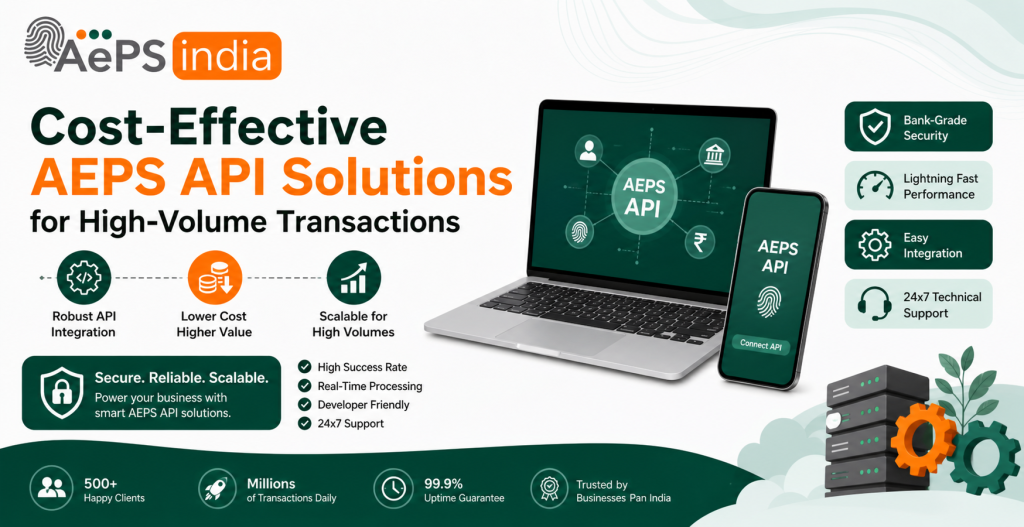
In India’s fast-growing digital payment ecosystem, businesses handling high-volume AEPS transactions need cost-effective and reliable API solutions. AEPS, or Aadhaar Enabled Payment System, allows secure and fast services such as cash withdrawal, balance inquiry, mini statements, and Aadhaar-based fund transfers. But when transaction volumes are high, Aeps india is the right AEPS API provider is critical to ensure speed, security, and minimal costs.
Cost-effective AEPS Aadhaar Enabled Payment System API solutions in India typically feature a one-time setup fee of ₹12,000–₹35,000, with competitive transaction charges ranging from ₹0.25 to ₹10 or 0.5%-1% per transaction. Aeps india offering affordable Aeps integration include Aeps India provide secure, NPCI-compliant services designed to boost financial inclusion for fintech startups and rural retail, often including white label Aeps, customizable, and high-success-rate options.
AEPS (Aadhaar Enabled Payment System) API solutions enable businesses to integrate secure, biometric-based banking services such as cash withdrawals, balance inquiries, and mini-statements directly into their applications. These Aeps API facilitate instant, cardless transactions using Aadhaar authentication, transforming retail outlets into mini-ATMs to support financial inclusion.
Aeps india offers a reliable and affordable AEPS API solution in India, specially designed for businesses managing high volume AEPS transactions. With lower per-transaction costs, real-time processing, and NPCI-compliant security, businesses can scale operations without worrying about performance or downtime.
By integrating cost effective AEPS API from Aeps india, businesses can increase transaction efficiency, reduce operational expenses, and provide smooth banking services to customers, ensuring growth in India’s competitive digital payment market.
Aeps india provides high-performance AEPS API solution designed for high-volume transactions. With easy integration, NPCI-compliant security, and competitive pricing, businesses can scale operations efficiently while delivering smooth and secure digital banking experiences. Whether you are a fintech startup, distributor, or service provider, using a reliable and low cost AEPS API from Aeps india ensures your AEPS business grows profitably and securely.
Choosing a cost-effective AEPS API from Aeps india helps businesses grow faster, manage high-volume operations efficiently, and provide seamless digital payment services to customers across India.
In this blog, we will explore why Cost effective AEPS API is the ideal choice for businesses looking for cost-effective, high-performance solutions, how it can handle large transaction volumes seamlessly, and the key benefits and features that make it stand out in India’s AEPS India.
What is Cost-Effective AEPS API Solutions
Cost-effective AePS API solutions enable secure, Aadhaar-based banking (cash withdrawals, deposits, balance inquiries) without expensive infrastructure, with setup fees typically ranging from ₹12,000 to ₹35,000 for basic Aeps API access. These, often white label Aeps api, solutions (from Aeps India are designed for fintechs, retailers, and startups to facilitate financial inclusion with low investment.

AEPS API Solution work
AEPS API solutions enable secure, real-time, cardless banking transactions (cash withdrawal, balance inquiry, mini-statement) by linking merchant apps to NPCI using Aadhaar and biometric data. It works via biometric authentication, allowing retailers to function as mini-ATMs, primarily facilitating financial inclusion in rural areas.
How AEPS API Solution Works:
- Transaction Initiation: The customer provides their 12-digit Aadhaar number, bank name, and transaction type (withdrawal/balance) to a merchant.
- Biometric Authentication: The merchant uses a registered biometric scanner (fingerprint) to capture the customer’s biometric data.
- Secure Data Transmission: The app sends the encrypted Aadhaar and biometric data via the AEPS API to the NPCI (National Payments Corporation of India).
- Bank Verification & Processing: NPCI passes the data to the respective bank for verification. Once authenticated, the bank processes the transaction.
- Instant Settlement & Confirmation: The transaction result is sent back, and the merchant receives instant confirmation, allowing immediate cash disbursement to the customer.
Services Supported by AEPS API
AEPS API facilitate essential, secure, and interoperable banking services including cash withdrawal, balance enquiry, mini statement, and Aadhaar Pay using Aadhaar-linked biometric authentication. These Aeps services enable instant, cashless transactions and real-time settlements, allowing businesses to turn terminals into micro ATM for rural banking.
Key services supported by AEPS API include:
- Cash Withdrawal: Enables users to withdraw money from their Aadhaar-linked bank account via a business correspondent.
- Balance Enquiry: Provides real-time checking of account balances using fingerprint or iris scanning.
- Mini Statement: Generates a snapshot of the last few transactions for tracking account activity.
- Aadhaar Pay (Merchant Payments): Allows merchants to accept payments from customers using their Aadhaar number, supporting cashless transactions for small businesses.
- Cash Deposit: Facilitates depositing cash into an Aadhaar-linked bank account.
- Aadhaar to Aadhaar Fund Transfer: Enables instant money transfers between two Aadhaar-linked accounts without needing bank account details.
- eKYC Services: Provides electronic Know Your Customer verification for instant, paperless onboarding.
- Direct Benefit Transfer (DBT) Support: Facilitates the receipt of government subsidies and pensions.
These services are widely used to expand banking access in rural areas and can be integrated into Aeps application or Aeps platforms to offer seamless, secure, and interoperable financial services.
Read Blog : Aadhaar Enabled Payment System API Explained: Complete Guide
Types of AEPS API Solution
AEPS Aadhaar Enabled Payment System API solutions enable secure, biometric-based banking transactions via Aadhaar authentication, providing essential services like cash withdrawal, balance inquiry, mini-statements, and cash deposits. These best Aeps API facilitate financial inclusion, allowing fintechs, retailers, and agents to act as micro-ATMs and offer banking services.
Key Types of AEPS API Solutions
- Cash Withdrawal API: Enables users to withdraw cash from their linked bank accounts at agent locations using fingerprint or iris authentication.
- Balance Inquiry API: Provides real-time, instant checking of bank account balances.
- Mini Statement API: Fetches a summary of the last 5–10 transactions for the user’s bank account.
- Cash Deposit API: Allows agents to accept cash and deposit it directly into a customer’s Aadhaar-linked account.
- Aadhaar Pay API (Merchant Payments): Enables merchants to receive payments from customers without a card or PIN, using biometric authentication.
- Fund Transfer API (Aadhaar to Aadhaar): Facilitates secure, instant interbank or intra-bank money transfers.
- eKYC Services: Provides real-time, paperless electronic Know Your Customer verification.

AEPS API Solution Use Cases
AEPS API solutions enable secure, cardless, and PIN-less banking transactions, primarily facilitating financial inclusion in rural India by turning local shops into mini-banks. Key use cases include cash withdrawals, cash deposits, balance inquiries, mini-statements, Aadhaar-to-Aadhaar fund transfers, and Direct Benefit Transfers (DBT).
Top Use Cases for AEPS API Solutions:
- Micro-ATMs & Cashless Banking: Local kirana stores, pharmacies, and retailers act as business correspondents (BCs) to offer doorstep cash withdrawals and deposits to customers using only biometric (fingerprint/iris) authentication.
- Direct Benefit Transfer (DBT) Distribution: Government welfare payments, such as pensions, MNREGA wages, and subsidies, are directly disbursed into beneficiaries’ Aadhaar-linked bank accounts, reducing corruption and delays.
- Balance Inquiry & Mini Statement: Instant, real-time access to bank account balances and recent transaction history, providing transparency to rural users without requiring smartphone apps.
- Aadhaar Pay (Merchant Payments): Enables merchants to accept payments from customers via Aadhaar authentication, bypassing the need for POS machines or card transactions.
- Aadhaar-to-Aadhaar Fund Transfer: Secure interbank or intrabank fund transfers initiated through Aadhaar authentication.
- eKYC Services: Facilitates instant, paperless, and digital Know Your Customer (Aeps KYC) verification for opening bank accounts, SIM card activation, and other financial services.
- Financial Inclusion in Remote Areas: Provides essential banking services in underserved regions, eliminating the need to travel to distant bank branches or ATM locations.
These API solutions are widely integrated into mobile banking Aeps apps, fintech Aeps b2b platforms, and retail POS systems to offer comprehensive, secure, and accessible banking services.
Read Blog : AEPS Registration Online: Complete Guide for 2026
Who Can Use High-Volume AEPS API Solutions?
High-Volume AEPS API solutions are designed for entities requiring robust, secure, and fast transactional capabilities to facilitate, or provide, basic banking services (cash withdrawal, balance inquiry, mini-statement) to users via Aeps biometric authentication. These Aeps solutions are primarily utilized by businesses aiming to act as “mini-banks” or “micro-ATMs”.
Entities Authorized to Use High-Volume AEPS APIs:
- Fintech Companies and Startups: Entities looking to integrate comprehensive, secure, and scalable Aeps banking services into their Aeps apps or, best Aeps platforms.
- Banking Correspondents (BCs) & Agents: Authorized agents who provide banking services on behalf of banks, particularly in areas with limited bank branches.
- Retailers and Small Business Owners: Shops (e.g., Kirana stores, pharmacies, mobile shops) that want to convert their location into a, functional, micro-ATM.
- Microfinance Institutions (MFIs): Aeps india that provide financial services in remote areas, including loan disbursement and, collection, often using Aadhaar authentication.
- Common Service Centers (CSCs) & E-Mitra Centers: Digital,, service hubs offering various, or diverse,, government-to-citizen and, financial services,.
- Digital Wallets and Payment Service Providers: Top Aeps Platforms that allow users to link their Aadhaar to perform, or execute, transactions, seamlessly.
- Insurance and Pension Disbursement Agencies: Aeps india that process claim settlements or disburse, pension amounts directly, to, beneficiaries’ bank accounts.
- E-commerce and Online Marketplaces: Entities that use Aadhaar-based payments to expand their reach in rural areas.
Key Requirements to Use High-Volume AEPS API:
- Partnership: Registration with a licensed and NPCI/RBI-approved AEPS API provider like Aeps india.
- Technical Infrastructure: A secure, or safe, server environment (Linux/Windows) that can handle high volume Aeps API calls.
- Hardware: STQC/UIDAI-certified biometric, fingerprint or, iris scanner.
- KYC Compliance: Mandatory, or, strict, KYC documentation, including PAN card, Aadhaar, and bank account details.
These best Aeps api solutions are specifically beneficial for handling large volumes of, daily, transactions securely, often with features like instant commission settlement and, 24/7 support.
Understanding High-Volume AEPS Transactions
High-Volume Aadhaar Enabled Payment System (AePS) transactions represent a critical, high-speed digital financial infrastructure in India, primarily serving rural and semi-urban areas by enabling banking services without physical debit cards or PINs. With over 4.86 billion transactions in the 2022-23 fiscal year, this system leverages biometric authentication to facilitate “doorstep banking” via Business Correspondents (BCs) and Micro ATMs.
Here is a detailed understanding of high-volume AePS transactions:
Key Components of High-Volume AePS
- Interoperability: Customers can use any bank-account-linked Aadhaar at any micro-ATM, regardless of the bank, increasing transaction volume across different networks.
- Biometric Authentication: Transactions are secured using fingerprint or iris scans, providing high security and allowing individuals with low literacy to access banking.
- Core Services: The Aeps system handles cash withdrawals (98.4% of transactions), balance inquiries, mini-statements, and Aadhaar-to-Aadhaar fund transfers.
- Daily Limits: Generally, maximum cash withdrawal is capped at ₹10,000 per transaction, with total daily limits usually up to ₹50,000 per account.
Factors Influencing High Transaction Volumes
- Covid-19 Impact: The pandemic accelerated adoption, with a 1.6 billion transaction increase in 2020-21.
- Direct Benefit Transfers (DBT): Subsidies, pensions, and MNREGA wages are deposited into Aadhaar-linked accounts, prompting beneficiaries to withdraw cash via local agents.
- Limited Banking Infrastructure: In remote villages with few ATMs or branches, AePS acts as the primary, sometimes only, source of banking.
- High-Volume Agents: Retailers acting as BCs turn their shops into “mini-banks,” significantly increasing local transaction traffic.
Challenges in High-Volume Operations
- Transaction Failures (BD & TD): Over 1 in 5 transactions fail, with Business Declines (BD) like insufficient balance (~17.73%) and Technical Declines (TD) due to network/server issues (~4.95%) being common.
- Bank-Specific Downtime: Large public sector banks (PSBs), which handle 73% of transactions, often face server downtime, impacting thousands of users.
- Interchange Fee Burden: Inter-bank (“off-us”) transactions have risen to 51.9%, causing high,, costly fee burdens for issuing banks.
Security and Compliance
- Real-Time Monitoring: NPCI monitors transactions to detect suspicious activity.
- RBI Guidelines: New security rules (effective Jan 1, 2026) introduce enhanced verification, such as two-factor authentication and improved liveness detection to prevent biometric spoofing.
- Data Protection: Secure, encrypted pathways (similar to a private, locked tunnel) are used for transactions.
Business and Economic Impact
- Agent Revenue: Retailers and agents earn ₹2–₹15+ per transaction, encouraging high-volume operations.
- Financial Inclusion: By 2022-23, transaction volumes grew to 4.86 billion, significantly contributing to a cashless, inclusive economy.
- Operational Efficiency: Banks are increasingly using automated reconciliation bots to handle 30,000+ daily transactions in just 20 minutes.
For high-volume agents, maintaining a reliable, high performance Aeps API and ensuring daily cash liquidity are essential for managing the high volume of daily transactions.

AEPS API for Cash Withdrawal, Balance Inquiry, and Mini Statement
AEPS (Aadhaar Enabled Payment System) APIs facilitate secure, real-time banking transactions Cash Withdrawal, Balance Inquiry, and Mini Statement using Aadhaar authentication and biometrics (fingerprint/iris) at agent points or Micro-ATMs. These secure Aeps API allow Aeps india to integrate, typically through Aeps India 24/7, enabling rural banking, digital wallets, and merchant payments.
Key AEPS API Functionalities
- Cash Withdrawal (CW): Enables customers to withdraw cash from their Aadhaar-linked bank account, with daily transaction limits typically up to ₹10,000.
- Balance Inquiry (BI): Provides real-time, instantaneous checking of account balances via biometric verification.
- Mini Statement (MS): Generates a record of the last 5 to 10 transactions for tracking account activity.
- Aadhaar Pay: A merchant-focused, higher-limit, or no-limit transaction method for payments.
Technical and Operational Aspects
- Authentication: Requires the Aadhaar Number, Bank Name, and Biometric Input (Fingerprint/Iris).
- Integration: Provided by Aeps India via secure Aadhaar Enabled Payment System API endpoints for web or mobile apps.
- Security: Transactions are secure, compliant with NPCI, and require biometric authorization, ensuring high success rates.
- Commission Structure: Retailers/agents earn tiered commissions, often higher for larger withdrawal volumes.
Read Blog : Complete Guide to AEPS Banking in India
Why High-Volume Businesses Need AEPS API Solutions
High-volume businesses including fintech startups, retail chains, and banking correspondents require Aadhaar Enabled Payment System API solution to process large quantities of secure, cardless, and real-time banking transactions. By integrating AEPS API, these businesses can turn existing retail points into “micro-ATMs,” allowing for cash withdrawals, balance inquiries, and fund transfers using only an Aadhaar number and biometric authentication.
Key reasons why high-volume businesses need AEPS API solutions include:
1. High-Volume Transaction Processing and Reliability
- Scalability: AEPS API designed to handle millions of transactions daily, making them suitable for high-volume, enterprise-level operations.
- High Success Rates: Aeps india is one of the top Aeps API provider offer 98%+ transaction success rates with minimal downtime, ensuring that large-scale operations run smoothly.
- Real-Time Processing: Transactions are processed immediately (2-3 seconds), which is essential for user experience.
2. Enhanced Revenue Streams and Customer Footfall
- Direct Commission Income: High-volume businesses earn daily commissions (often ₹2–₹15+ per transaction).
- Increased Footfall: Acting as a “mini-bank” increases customer traffic to retail locations, boosting sales of primary products.
- Competitive Edge: Offering banking services attracts customers who lack easy access to traditional bank branches or ATMs, especially in rural and semi-urban areas.
3. High Security and Reduced Fraud
- Biometric Authentication: Transactions require fingerprint or iris scans, which are significantly more secure than card-based PIN transactions, minimizing fraud risks.
- Compliance: Aeps india ensure compliance with RBI and NPCI guidelines, including the 2026 mandates for strict KYC and, “one operator, one bank” rules.
4. Operational Efficiency and Low-Cost Infrastructure
- Lower Setup Costs: Businesses do not need to invest in heavy ATM hardware; a smartphone, internet connection, and a biometric device are sufficient.
- Automated Reconciliation: Aeps API-based systems provide real-time status updates and digital receipts, reducing manual work and simplifying reconciliation.
- Instant Settlement: Highest volume Aeps API solutions offer daily or instant wallet-to-bank transfers, keeping working capital moving.
5. Interoperability and Inclusivity
- Multi-Bank Support: The Aadhaar payment API connects to the National Payments Corporation of India (NPCI) network, allowing customers from any bank to transact at any location.
- Financial Inclusion: Businesses can tap into unbanked populations, supporting Government Benefit Transfers (DBT).
For high-volume businesses, a White Label AEPS API solution is often preferred, allowing them to offer these services under their own brand, using a customize Aeps API to create a unique, branded, and secure Aeps platform.
Read Blog : Best AEPS Android Application in India
Why Businesses Need Cost-Effective AEPS API Solutions
Cost-effective Aadhaar Enabled Payment System (AEPS) API solutions are essential for businesses—ranging from local Kirana stores to fintech startups to tap into India’s growing digital economy without high infrastructure investments. These Aeps software solutions enable secure, real-time, Aeps biometric-based banking transactions (cash withdrawal, balance inquiry, mini-statement) directly through a smartphone or computer, with setup costs often ranging between ₹12,000 and ₹35,000.
Here is why businesses need cost-effective AEPS API solutions:
1. New Revenue Stream Through Daily Commissions
- High Earnings Potential: Retailers and agents can earn substantial daily income, with commissions typically ranging from ₹2 to ₹15+ per transaction, especially for cash withdrawals, which can significantly boost monthly income.
- High-Volume Incentives: Aeps india offer tiered Aeps commission structures, providing higher payouts for higher transaction volumes (e.g., ₹3,000+ per transaction).
2. Low Setup and Operational Costs
- Minimal Infrastructure: Unlike traditional micro ATM, Aadhaar Enabled Payment System API do not require expensive machinery. Businesses only need a smartphone/computer and a UIDAI-certified Aeps biometric device (costing roughly ₹1,500–₹3,000).
- Budget-Friendly Integration: Cost-effective Aeps india often offer Cheap Aeps api, fast Aeps api setup options (white label Aeps api solutions) that allow businesses to go live quickly without massive upfront capital.
3. Increased Customer Footfall and Loyalty
- Turning Shops into “Micro-ATMs”: By providing essential banking services, local shops attract more customers, including those in rural areas with limited banking access. This increased footfall often leads to higher sales of the retailer’s primary products (cross-selling).
- Building Community Trust: Offering reliable, secure, and instant banking services builds long-term customer trust and loyalty within the community.
4. High Security and Reduced Fraud
- Biometric Authentication: AEPS uses unique fingerprint or iris scans, which are more secure than traditional PIN-based systems, significantly reducing the risk of fraud.
- Real-Time Processing: Transactions are processed in real-time through the NPCI network, ensuring immediate, safe, and traceable, with instant confirmations for both the agent and the customer.
5. Interoperability and Financial Inclusion
- Bank-Agnostic Access: Customers can use any Aadhaar-linked bank account, regardless of the bank, increasing the potential customer base for the retailer.
- Bridging the Rural Banking Gap: Low price AEPS API are crucial for reaching unbanked and underbanked populations in rural and remote areas, bringing them into the formal financial system.
6. Support for Government Initiatives (DBT)
- Direct Benefit Transfer (DBT) Access: The Aeps API facilitates easy, secure, and immediate withdrawal of government benefits, such as pensions, subsidies, and wages, directly into the beneficiaries’ accounts.
Summary Table: Cost-Effective AEPS API Benefits
| Feature | Business Impact |
|---|---|
| High Commissions | Increases daily revenue by ₹2–₹15 per transaction |
| Low Setup Cost | Lowers entry barrier (Smartphone + Aeps Biometric device) |
| Increased Footfall | Boosts sales via higher customer traffic |
| Biometric Security | Reduces fraud, boosts customer trust |
| Interoperability | Serves customers from any bank |
| Real-Time Settlement | Improves working capital and cash flow |
For long-term success, businesses should choose Aeps india that offer 98%+ transaction success rates, 24/7 technical support, and robust, compliant top Aeps API solutions.

Benefits Cost-Effective AEPS API
A cost-effective Aadhaar Enabled Payment System (AEPS) API solution allows businesses to provide secure banking services, such as cash withdrawals and balance inquiries, using a customer’s Aadhaar number and biometric authentication. By using a cost-effective Aeps API, businesses can act as “micro-ATMs,” promoting financial inclusion and generating new revenue without the high costs of traditional banking.
Key advantages of a cost-effective AEPS API solution include:
- Low Initial Investment & Setup Costs: Compared to traditional banking setups, AEPS transaction API solution require minimal investment, often needing only a smartphone and a biometric device, making them accessible to small businesses.
- Affordability: Such Aeps solution involve low setup costs and primarily require a smartphone and a biometric device. Retailers can earn commissions per transaction, leading to recurring income.
- New Revenue Streams: Retailers can earn commissions on each transaction, particularly high-value cash withdrawals.
- Increased Customer Footfall: Offering banking services attracts more customers, potentially boosting sales of other products.
- High Security & Reduced Fraud: AEPS utilizes biometric authentication, which is generally more secure than traditional methods.
- Real-Time Processing & Settlement: Transactions are often processed in real-time, allowing for instant withdrawals and prompt settlements for agents.
- Interoperability: The AEPS biometric payment API connects to various banks, allowing customers from any bank to use the service.
- Branding Options: White label Aeps solutions are often available, allowing businesses to use their own branding.
- Easy Integration: Aeps india offer white label Aeps api solution that can be easily integrated into existing platforms.
- Support for Government Benefits: The Aeps system facilitates the withdrawal of government subsidies and welfare payments locally.
- 24/7 Support: Technical support is often available around the clock to ensure smooth operations.
In terms of financial and business impact, transaction costs are generally low, enabling high-profit margins. These best Aeps solutions also support financial inclusion in rural areas by making banking services available locally. Furthermore, they are scalable to handle growing transaction volumes.
Read Blog : Top AEPS Company in India: Complete Guide for Retailers & Businesses
Features Cost-Effective AEPS API Solution
A Cost-Effective Aadhaar Enabled Payment System (AEPS) API solution allows businesses, fintechs, and retailers to integrate secure,, biometric-based banking services (cash withdrawal, balance inquiry, mini-statement) directly into their Aeps application or websites. It turns retail points into “micro-ATMs,” providing a low-cost alternative to traditional banking infrastructure.
Key Features of Cost-Effective AEPS API Solutions
- Aadhaar & Biometric Authentication: Uses unique, fingerprint or iris scan authentication (via UIDAI certified Aeps devices), significantly reducing fraud and removing the need for physical cards or PINs.
- Interoperability & Bank Agnostic: Allows users to conduct transactions across different banks, connecting to a vast, unified network.
- Real-time Processing & Settlement: Ensures immediate transaction confirmation, which is crucial for building trust, and often provides instant, or same-day (T+0/T+1) settlement to agent wallets.
- Multiple Transaction Types: Supports cash withdrawal, cash deposit, balance inquiry, mini-statement generation, and Aadhaar-to-Aadhaar fund transfers.
- White-Labeling & Customization: Provides pre-built, customizable Aeps api, and rebrand Aeps platforms that allow businesses to offer services under their own brand logo and name, reducing development time and costs.
- Detailed Reporting & Admin Dashboard: Features a robust Aeps dashboard for managing agents, monitoring transactions, and tracking commissions in real-time.
- High Success Rates & Reliability: Offers a stable and reliable Aeps API infrastructure, ensuring a high success rate (often 98% or more) and minimal downtime.
- Developer-Friendly Documentation & Support: Provides comprehensive Aeps documentation and 24/7 technical support for easy, rapid integration.
Cost-Effectiveness Factors
- Low Setup Fees: White label Aeps api solutions often have low one-time Aeps setup fees (e.g., ₹15,000 – ₹30,000), reducing the initial investment in Aeps software development.
- Commission-Based Revenue: Retailers/agents can earn a steady income (e.g., ₹2 to ₹15+ per transaction).
- Reduced Operational Costs: Lowers costs by decreasing dependence on physical bank infrastructure.
- Tiered Commission Structure: Higher transaction amounts often yield higher commissions for retailers.
AEPS API Integration Process for Businesses
The AEPS API integration process involves partnering with an authorized Aeps india and following a structured technical and compliance roadmap. You cannot integrate directly with the National Payments Corporation of India (NPCI) network.
Here are the key steps for AEPS API integration:
1. Partner Onboarding and Registration
- Choose a Certified Provider: Select an NPCI-licensed Aeps india that follows RBI guidelines.
- Business Registration and KYC: Register your business and provide mandatory Aeps KYC documents like Aadhaar, PAN, bank details, photos, and business proof for verification.
- Sign Agreements: Formalize the partnership with an agreement detailing terms and conditions.
2. Acquire and Set Up Hardware
- Purchase Certified Devices: Get UIDAI/STQC-certified Aeps devices.
- Install RD Service Software: Install the manufacturer’s RD service software for secure data capture.
- Register Devices: Register your Aeps biometric devices serial number with the Aeps india.
3. Technical Integration and Development
- Obtain API Credentials: Receive Aeps API keys, access tokens, and technical documentation after Aeps registration.
- Integrate the API: Aeps india team will build the server-side logic and front-end interface for best Aeps application.
- Implement Secure Biometric Capture: Integrate Aeps biometric SDK to capture and encrypt data for authentication. Do not store raw biometric data locally.
4. Testing and Deployment
- Sandbox Testing: Test the integrated Aeps system in a sandbox environment to ensure functions, error handling, and security work correctly.
- Go Live (Production): Switch to the live environment with production credentials after successful testing.
5. Monitoring and Support
- Launch Services: Aeps india offering best AEPS services.
- Monitor Transactions: Continuously monitor transactions and handle settlement and reconciliation.
- Provide Customer Support: Handle customer complaints and failed transactions, acting as the primary contact.

Commission and Revenue with AEPS API
AEPS (Aadhaar Enabled Payment System) API enables businesses to facilitate cash withdrawals, balance inquiries, and mini-statements, generating revenue through commissions, typically ₹2–₹15+ per transaction for agents. High-value transactions (≥₹3,000) offer the highest Aeps commissions. Retailers often use this, powered by Aeps India for recurring income, while Aeps API setup cost range from ₹15,000 to ₹1.2 Lakhs.
Core Revenue and Commission Opportunities (2025-2026)
Cash Withdrawal (Highest Earner):
- ₹100 – ₹999: ₹2 – ₹3
- ₹1,000 – ₹1,499: ₹3 – ₹4.5
- ₹1,500 – ₹1,999: ₹4.5 – ₹5.5
- ₹2,000 – ₹2,499: ₹5.5 – ₹6
- ₹2,500 – ₹2,999: Up to ₹7
- ₹3,000 & Above: ₹10 – ₹13+ per transaction
- Balance Inquiry: ₹1 – ₹5 per query
- Mini Statement: ₹2 – ₹7 per statement
- Aadhaar Pay: 1% charge on transactions (suitable for higher, non-limit-constrained transactions up to ₹50,000)
- Monthly Potential: High-volume agents can earn ₹15,000–₹25,000+ per month.
Revenue Model for Businesses
- Commission-Based Income: Agents and retailers earn Aeps commission on every successful transaction.
- Increased Foot Traffic: Aeps india offering Aeps banking software services drives more customers to retail, enhancing cross-selling opportunities.
- Low Cost/High Return: Minimal investment in a Aeps biometric device (₹1,500–₹3,000) is required.
- Recurring Income: High-volume agents can generate significant monthly revenue.
Startup and Setup Costs
- API Integration: Aeps india provide Costs range from ₹15,000 to over ₹1 Lakh, depending on the features.
- Hardware: Aeps Biometric scanners (e.g., Mantra MFS100) are around ₹1,500–₹3,000.
- Transaction Fees: While UIDAI doesn’t charge, bank-levied fees can range from ₹0.25 to ₹10 per transaction.
Key Business Models with AEPS API
- Retailers/Kirana Stores: Act as a “mini-bank,” increasing customer footfall, which boosts sales of primary goods by up to 20%.
- White Label Solution: Startups can use a white label Aeps API to build their own brand identity, using a pre-built Aeps portal (costing ₹15,000–₹1.2 Lakhs) to manage their own network of agents and distributors.
- Distributor/Master Distributor: Manage a network of retailers and earn commissions based on the total transaction volume of the network.
Value-Added Services to Increase Revenue
Beyond standard AEPS, the AEPS cash withdrawal API can be bundled with other services for higher income:
- Domestic Money Transfer (DMT): Moving funds on behalf of customers.
- BBPS (Bharat Bill Payment System): Utility bill payments (electricity, gas, water).
- Mobile/DTH Recharge: Prepaid services.
- Insurance/Loan Repayments: Collecting premiums or loan installments.
Costs to Start an AEPS Business
- One-time Setup/API Fee: ₹12,000 – ₹35,000
- White Label Software/Portal: ₹15,000 – ₹1.2 Lakhs+
- Biometric Device: ₹1,500 – ₹3,000 (e.g., Mantra)
Top Features of Reliable AEPS API Providers
- High Success Rate: >98% success rate to ensure trust.
- Instant/T+0 Settlement: Immediate credit of money to the wallet.
- 24/7 Support: Technical assistance to handle transaction failures.
- Comprehensive Services: Aeps india one of the AEPS provider often include DMT (Domestic Money Transfer), BBPS (Bharat Bill Payment System), and Micro ATM services.
- Multi-Bank Support: Ensuring high interoperability.
Read Blog : AEPS Solution Provider in India: Complete Business Guide
How to Maximize Profit with High-Volume AEPS Transaction
Maximizing profit with high-volume AePS transactions requires a combination of strategic location, high-yield transaction habits, and the utilization of tiered commission structures offered by Aeps india. Active agents can generate substantial monthly income (e.g., ₹10,000–₹30,000+) by focusing on high-value transactions, minimizing failed attempts, and offering complementary services.
Here is a structured approach to maximizing profit based on high-volume, authorized AEPS operations.
1. Optimize Transaction Value (Focus on ₹3,000+)
- Target Higher Slabs: Aeps Commissions are tiered; high-value withdrawals (typically ₹3,000 or more) provide the highest commission per transaction, often exceeding ₹13–₹15, while smaller withdrawals yield less.
- Balance Inquiry First: Perform a balance inquiry to ensure the account has sufficient funds, reducing the likelihood of a failed transaction which wastes time and resources.
- Utilize Mini Statements: Encourage customers to use the mini-statement service, which can earn you an additional ₹1–₹2 per inquiry.
2. Strategic Operations & High-Volume Management
- Prime Location: Set up in areas with limited bank/ATM access such as rural, semi-urban, or high-traffic market areas to maximize footfall.
- Cash Management (Velocity): Maintain a high cash float (availability of cash in hand) to handle large withdrawal volumes without interruption.
- Same-Day Settlement: Aeps india offers 24/7 instant or same-day, secure settlement, allowing you to reinvest your working capital immediately.
- High-Success Rate Platform: Utilize a top AEPS service provider like Aeps india that ensures >98% transaction success rates, reducing losses from failed attempts.
3. Diversify Revenue Streams (Cross-Selling)
- Bundle Services: Do not rely solely on withdrawals. Offer complementary services to increase profit per customer, such as:
- Domestic Money Transfer (DMT)
- BBPS (Utility Bill Payments: Electricity, Water, Gas)
- Mobile/DTH Recharges
- PAN Card Applications
- Increase Footfall: Use visible branding (ATM boards) to attract customers from other nearby shops.
4. Ensure Compliance and Security
- 2026 Regulatory Changes: As of January 1, 2026, new RBI regulations require stricter Aeps KYC for agents. Ensure you are a fully compliant, registered Business Correspondent (BC) to avoid service suspension.
- Use Validated Devices: Use only UIDAI-certified, STQC biometric devices (fingerprint scanners) to minimize fraud and technical failures.
- Never Store Data: Adhere to “no data storage” guidelines to avoid legal issues and build trust in the community.
5. Leverage Volume-Based Bonuses
- Understand Your Provider’s Structure: Aeps india offers “super prime” retailer bonuses or higher slabs for achieving high monthly transaction counts.
- Maintain Activity: Agents who are inactive for three months must Aeps re-KYC; keep your account active to maintain high-volume status.
By focusing on high-value transactions (₹3,000+), maximizing daily footfall, and offering a bundle of digital services, you can transform a local retail shop into a high-profit, mini-banking hub.
AEPS API Pricing Model for High-Transaction Businesses
AEPS API pricing for high-transaction businesses in India (2026) is characterized by high-volume, commission-based models that prioritize low per-transaction costs, high-speed settlements (T+0), and robust uptime (99.9%+). For high-volume users, Aeps india offer customized Aeps api, competitive rates where commissions for agents can reach up to ₹13-₹15+ per transaction, often with tiered structures.
Typical Pricing Models for High-Volume Businesses
Tiered Commission Structure (Agent Focus): Retailers/agents are rewarded with higher payouts for larger transactions.
- ₹100 – ₹999: ₹2 – ₹3 per transaction.
- ₹1,000 – ₹1,499: ₹3 – ₹4.5 per transaction.
- ₹1,500 – ₹1,999: ₹4.5 – ₹5.5 per transaction.
- ₹2,000 – ₹2,999: ₹5 – ₹7 per transaction.
- ₹3,000 – ₹10,000+: ₹10 – ₹13 or more per transaction.
- Volume-Based API Pricing: High-volume Aeps india can negotiate lower, fixed transaction charges (sometimes around ₹12-₹13 per withdrawal) or percentage-based fees (0.5%–1%) depending on the total volume.
- White Label/Wholesale API Pricing: For fintech startups and large, high-volume Aeps B2B entities, the initial Aeps setup cost ranges from ₹15,000 to ₹1.2 Lakhs, depending on the need for customization Aeps api, white label Aeps api branding, and dedicated support.
- Aadhaar Pay Pricing: For higher-value transactions (up to ₹50,000), agents can charge a small percentage (e.g., ~1%) to customers, offering a different revenue model than standard AEPS.
Cost Breakdown for High-Transaction Entities
- One-time Setup Fee: Typically ranges from ₹12,000 to ₹35,000 for standard Aeps API access.
- White-Label/Software Cost: Full, customized, or white-label Aeps api solutions often cost between ₹15,000 and ₹1.2 Lakhs+.
- API Service Provider Costs: Aeps india may charge around ₹20,000 to ₹35,000 for Aeps API integrate.
- Transaction Charges: Aeps india offer free Aeps API usage, some charge a nominal fee per transaction, while others provide high Aeps commissions (up to ₹12-₹13 per withdrawal).
- Annual Maintenance Charges (AMC): Often around ₹40,000 annually for support and platform maintenance.
- Maintenance: Annual fees can apply for support and server maintenance.
- Failed Transactions: Aeps india charge approximately ₹0.50 per failed, but attempted, authentication.
Price Examples
- AEPS API Service Provider: ~₹599 – ₹15,001.
- White Label AEPS API : ₹12,000 – ₹35,000.
- Premium/Custom API: ₹15,000 (White Label) – ₹4,50,000 (Proper API).
- Yearly Subscription: ~₹30,000 – ₹40,000.
Key Factors for High-Transaction Businesses
- Settlement Speed: Instant or same-day (T+0 or T+1) settlement is crucial to maintain cash flow.
- Transaction Success Rate: Aim for 98% or higher to avoid customer churn.
- Security (2026 Compliance): New RBI rules require “one-operator-one-bank” linking and mandatory full KYC, making security compliance a critical, non-negotiable component.
- Additional Income: High-volume agents can earn additional monthly incentives (e.g., ₹2,000+ for meeting specific transaction targets).
Note: The AEPS commission structure can vary by Aeps india, and as of 2026, new RBI regulations are in place to enhance security.

How Aeps india Offers Cost-Effective AEPS API Solutions
Aeps india offer cost-effective Aadhaar Enabled Payment System (AEPS) API solutions by offering flexible integration models, such as white-label Aeps software solutions, that reduce upfront Aeps development costs. These Aeps api solutions, generally priced between ₹12,000 and ₹35,000 for standard Aeps api setup, allow businesses to integrate Aeps banking services including cash withdrawals, balance inquiries, and mini-statements without building infrastructure from scratch.
Key Aspects of Cost-Effective AEPS API Solutions:
- Reduced Setup Costs: Aeps India offer, on average, a ₹12,000–₹35,000 Aeps setup fee for integrate Aeps API systems, often including white-label, customized Aeps, or pre-built Aeps B2B platforms.
- White-Label Solutions: These allow firms to rebrand the best AEPS platform, saving significant time and money on best Aeps software development, with costs for white-label Aeps portals ranging from ₹15,000 to over ₹1 Lakh.
- Low Transaction Fees: Transaction charges are generally minimal, ranging from ₹0.25 to ₹10 or 0.5%–1% of the transaction amount.
- High-Profit Margins: Retailers and agents can earn substantial commissions, often between ₹2 and ₹15+ per transaction, which can, in some cases, reach up to ₹109 for a ₹10,000 transaction, enhancing profitability.
- Infrastructure Savings: Businesses avoid the high capital investment of setting up physical branches or ATMs by using Aadhaar-based biometric authentication.
- Comprehensive Features: Packages often include, along with best AEPS, services like micro ATM service, prepaid recharges, and money transfers, which, together with the main API, offer a complete, cost-efficient financial suite.
- Minimal Hardware Requirements: The service requires only a smartphone/computer, internet connection, and a low cost Aeps biometric device (approx. ₹1,500–₹3,000), making it accessible for small retailers.
- Support and Maintenance: Aeps india include ongoing support, for which fees vary depending on the package chosen, ensuring long-term operational efficiency.
- Comprehensive Backend Support: AEPS India offer 24/7 technical support, reducing the need for in-house IT teams.
Typical Cost Structure:
- One-time Setup/Integration Fees: ₹12,000 – ₹35,000.
- White-Label Software/Portal: ₹15,000 – ₹1.2 Lakhs+.
- Biometric Device: ₹1,500 – ₹3,000.
- Transaction Charges: ₹0.25–₹10 or 0.5%–1% of the transaction value.
These solutions also support real-time settlement, which keeps working capital flowing for agents and retailers.
Read Blog : AEPS Software Company in India
Security and Compliance in AEPS API Integration
AEPS (Aadhaar Enabled Payment System) API solutions require robust, multi-layered security and strict regulatory compliance (RBI/NPCI) to protect financial data, featuring biometric authentication, end-to-end encryption, and real-time fraud monitoring. Key requirements include mandatory Aeps agent KYC, transaction velocity checks, and secure, encrypted Aeps API communication to ensure data integrity and prevent unauthorized access.
Key Security Components
- Biometric Authentication: Utilizes fingerprint or iris scans to verify identity, ensuring only authorized users can initiate transactions.
- End-to-End Encryption: Data is encrypted using PKI (Public Key Infrastructure) to prevent interception during transmission between the Aeps india and the NPCI server.
- Fraud Detection Systems: Implementation of Advanced Fraud Management Systems (EFRMS) to detect unusual activity, such as velocity limits on transactions and suspicious IP address patterns.
- Tokenization: Replaces sensitive Aadhaar numbers with unique tokens to reduce the risk of data theft.
- Secure API Integration: Adheres to secure coding practices, including validation of input data and protection against API-specific vulnerabilities (e.g., OWASP Top 10).
Compliance and Regulatory Standards
- RBI & NPCI Guidelines: Compliance with all Reserve Bank of India (RBI) and National Payments Corporation of India (NPCI) mandates.
- Stringent Agent KYC: Effective 2026, agents (ATOs – AePS Touchpoint Operators) must undergo rigorous KYC and periodic re-verification to prevent fraud.
- Data Localization: Ensuring all Aadhaar data remains stored securely within India, in compliance with government regulations.
- Real-Time Monitoring & Audits: Mandatory ongoing monitoring of transaction patterns and regular security audits of the Aeps API infrastructure.
Secure Implementation Checklist
- Choose a UIDAI-certified Aeps india.
- Implement 2-factor authentication for high-value transactions.
- Enable biometric locking for user accounts to prevent misuse.
- Maintain a detailed log of all transactions for audit trails.
Transaction Speed and Success Rate in AEPS API
AEPS API solutions in India are designed for high-speed, secure, and reliable banking transactions, generally offering a success rate of 98% or higher. They enable real-time processing of transactions, allowing for quick, often 30-second,, transactions, and provide instantaneous or same-day (T+0/T+1) settlement for agents.
Transaction Speed and Efficiency
- Real-Time Processing: Aeps india is the best AEPS API providers in 2026 offer near-instantaneous transaction processing and confirmation, ensuring a smooth experience for both agents and customers.
- Response Time: The system is engineered to handle millions of daily transactions with real-time response times, often within 2-3 seconds.
- Instant Settlement: Earnings and processed amounts are often credited to the agent’s wallet immediately or within same-day (T+0/T+1) cycles, preventing capital blockage.
- 30-Second Transactions: The user friendly Aeps mobile and web interfaces allow for fast, 30-second transactions.
Success Rate and Reliability
- 98%+ Success Rate: Aeps india target a 98% or higher transaction success rate to minimize customer frustration and business losses.
- High Uptime: Aeps india offer high uptime (often 99.9%), ensuring service availability during peak hours.
- Multi-Bank Support: Integration with numerous banks ensures a wider reach and higher likelihood of success across different bank accounts.
- Infrastructure: Robust multi-bank connected servers are used to minimize downtime.
Key Factors Affecting Performance
- Security & Compliance: Aeps india are NPCI & RBI compliant, using secure Aeps biometric devices for authentication, reducing the risk of fraud and, consequently, transaction failures.
- API Quality: A well-integrated, RESTful Aeps API is essential for high reliability and speed.
- Network Stability: Because AEPS depends on biometric data and internet connectivity, reliable connectivity at the retailer level is crucial.
Common Transaction Limitations
- Daily Limits: Generally range from ₹10,000 to ₹50,000, with per-transaction caps usually around ₹10,000.
- Reasons for Failure: Bank server maintenance (e.g., SBI) can sometimes lead to temporary, high-volume, failed transactions.

Scalability & Performance Optimization for AEPS APIs
Scalable and high-performance Aadhaar Enabled Payment System (AEPS) APIs are essential for handling high-volume, real-time financial transactions while ensuring low latency and high success rates. Optimization involves employing horizontal scaling, asynchronous processing (e.g., RabbitMQ, Kafka), database indexing, and leveraging CDNs for reduced latency. Secure, reliable Aeps API, such as those offered by Aeps india, provide 24/7 support and robust infrastructure.
Key Strategies for Scalability & Performance
- Horizontal Scaling: Increase server capacity by adding more nodes, allowing the AEPS infrastructure to handle increased transaction loads.
- Asynchronous Processing: Implement queues to manage high-volume transaction requests without overloading the backend system.
- Database Optimization: Use indexing, query optimization, and efficient data structures to speed up database lookups for transaction records.
- Reduced Network Latency: Utilize Content Delivery Networks (CDNs) and place servers closer to users to minimize delays in Aeps API responses.
- Auto-Scaling: Implement automatic scaling, such as cloud-based solutions, to adjust server resources based on real-time traffic, ensuring reliability during peak hours.
AEPS API Optimization Best Practices
- Load Balancing: Distribute incoming traffic across multiple servers to prevent single-point failures and improve response times.
- Caching Mechanism: Cache frequently accessed data (e.g., bank identification numbers) to reduce database load.
- Monitoring and Alerting: Utilize monitoring tools (e.g., Prometheus, Grafana) to proactively detect performance bottlenecks.
- Secure Transactions: Use Aadhaar-based biometric authentication (fingerprint/iris) with end-to-end encryption to ensure high security and compliance, as provided in solutions from Aeps india.
- Microservices Architecture: Break down the Aeps API into smaller, independent services to improve maintainability and scalability.
Performance Optimization for High-Traffic
- API Optimization: Implement rate limiting, throttling, and request validation to prevent abuse and ensure stability.
- Real-Time Processing: Utilize real-time transaction processing for immediate confirmation, which is crucial for banking services in remote areas.
- Testing & Optimization: Perform regular load testing and performance benchmarking to identify and fix bottlenecks.
By implementing these strategies, businesses can ensure their top AEPS API solution is scalable, reliable, and provides a seamless user experience, as suggested in reports from Aeps india.
Read Blog : Best AEPS Company for Retailers in India
NPCI Guidelines of AEPS API Solution 2026
Based on the latest NPCI and RBI guidelines effective from January 1, 2026, the Aadhaar Enabled Payment System (AEPS) API solutions have undergone significant changes to enhance security and reduce fraud. The focus for 2026 is on stricter operator due diligence, mandatory device standards, and continuous transaction monitoring.
Here are the key NPCI/RBI guidelines for AEPS API solutions in 2026:
1. Mandatory Operator Due Diligence (KYC)
- Full KYC Onboarding: Acquiring banks must conduct thorough KYC and background checks on all AePS Touchpoint Operators (ATOs) before allowing them to use the API, aligning with RBI’s Master Direction, 2016.
- Re-KYC for Inactivity: Agents/operators who have not performed any financial or non-financial transaction for three consecutive months will be considered inactive. They must complete a fresh KYC process before resuming services.
- “One Operator, One Bank” Rule: To improve accountability, each AEPS operator can be linked to only one acquiring bank.
2. Technical & API Security Enhancements
- L1 Registered Devices (RD): Mandatory use of UIDAI-certified, Aeps device L1-compliant biometric (fingerprint/iris) scanners is required. These devices ensure that encrypted biometric data is transmitted securely, preventing device tampering.
- API Usage Control: Scalable AEPS API must be used strictly for legitimate, authorized AePS transactions (cash withdrawal, balance inquiry, mini-statement) to prevent misuse.
- Real-time Monitoring: Banks are required to monitor transaction patterns, including volume, frequency, and location, to detect fraudulent activity in real-time.
- Two-Factor Authentication (2FA): Enhanced verification, such as mandatory biometric scans, is required, with potential additional security measures (like OTP) for high-risk transactions.
3. Transaction Limits and Operational Rules
- Withdrawal Limits: Cash withdrawal is generally capped at ₹10,000 per transaction and ₹50,000 daily.
- Prohibition of Extra Charges: Agents are not permitted to charge additional fees for AEPS services.
- Account Selection: If a user has multiple bank accounts linked to Aadhaar, the transaction will use the primary account.
- Mandatory Receipts: Transaction receipts must be provided.
4. Key Requirements for API Integration in 2026
- Partnering with Certified Providers: Businesses need to collaborate with NPCI-certified Aeps india.
- Required Documentation: This includes Aadhaar, PAN, and Aadhaar-linked bank account details.
- Physical Verification: Business location verification may be necessary in some instances.
These regulations aim to enhance trust in digital payments and protect users, especially in areas where AEPS is a primary banking method.
How to Reduce AEPS Transaction Costs Effectively
Reducing AePS transaction costs effectively requires a mix of strategic partner selection, leveraging “on-us” transactions, and implementing security measures to avoid losses from failed or fraudulent transactions. Costs typically range from ₹2–₹15 per transaction, with fees often borne by the customer or absorbed by the merchant.
Here are the most effective strategies to minimize AePS transaction costs:
1. Select the Right Service Provider (CSP/BC)
- Compare Commission Structures: Aeps india offer varying commission structures for agents. Opt for Aeps india that offer higher commissions on cash withdrawals (e.g., ₹3,000+ transactions often yield higher earnings).
- Opt for Free/Low-Cost IDs: Aeps india that offer free or low-cost AePS registration for agents to reduce upfront operational expenses.
- Prioritize High Success Rates: B2b Aeps platforms with a transaction success rate of over 98% to minimize failed transaction costs and improve trust.
- 24/7 Support: Ensure the Aeps india offers round-the-clock support to quickly resolve technical glitches that may lead to double deductions or stuck funds.
2. Leverage “On-Us” Transactions
- Use Bank-Specific Micro-ATMs: AePS transactions can be “on-us” (same bank) or “off-us” (different bank). “On-us” transactions often have lower or no transaction charges for the merchant.
- Encourage Account Holder Convenience: Encourage customers to use local bank agents that match their bank accounts (e.g., a SBI customer using an SBI BC agent) to avoid inter-bank, “off-us” charges.
3. Optimize Transaction Methods
- Promote Lower-Cost Alternatives: For higher-value, non-urgent, or internal transfers, promote UPI or IMPS, which are often cheaper than AePS.
- Use In-Person Terminals: Use authorized, secure micro-ATMs (point-of-sale terminals) at physical, trusted locations to avoid hidden fees associated with insecure online transactions.
- Batching Transactions: Avoid frequent small withdrawals. Encourage customers to make larger, infrequent withdrawals, as many fee structures are based on a per-transaction rate.
4. Implement Security and Prevent Fraud
- Minimize Chargebacks: Chargebacks (disputed transactions) and fraud carry significant costs. Ensure the customer is physically present, use verified Aeps biometric devices, and always provide a transaction receipt to avoid disputes.
- Use Proper Biometrics: Ensure Aeps fingerprints are clean and dry, or use iris scanners to prevent transaction failures that may incur unnecessary charges.
- Validate Before Transaction: Check customer Aadhaar-bank mapping and sufficient balance beforehand to avoid failed transactions.
5. Utilize Government and Banking Subsidies
- Leverage PMJDY Accounts: Transactions done under government schemes like Pradhan Mantri Jan Dhan Yojana (PMJDY) often have lower or waived charges.
- Check Official Bank Rate Cards: Aeps india often offer lower, more transparent, or even zero fees.
Summary Table for Cost Reduction
| Strategy | Actionable Step |
|---|---|
| Partner Selection | Select BCs with high commissions & low, transparent fees. |
| Transaction Method | Encourage “On-Us” transactions (Same Bank). |
| Operational Efficiency | Use reliable, high-success-rate (>98%) platforms. |
| Security | Ensure proper, secure biometric scanning to avoid failed attempts. |
| Frequency | Group transactions (fewer, higher-value). |
Note: As of January 1, 2026, new RBI regulations require stricter KYC for agents, and agents inactive for three months must undergo a fresh Aeps KYC process. Keeping your Aeps KYC updated ensures uninterrupted, cost-effective service.

How to Choose the Best AEPS API Provider in India
Aeps india the best AEPS API provider in India requires prioritizing NPCI/RBI certification, high transaction success rates (98%+), instant settlement options, and robust security. Key factors include competitive commission structures, 24/7 technical support, user friendly Aeps API integration, and low downtime. Aeps india often offer additional services like Mini ATM, BBPS, and DMT.
Key Considerations for Choosing the Best AEPS Provider:
- Security & Certification: Aeps india is authorized by the National Payments Corporation of India (NPCI) and follows RBI guidelines, using end-to-end encryption (E2E) to secure data.
- Transaction Success Rate: Select a Aeps india with a high success rate (98% or higher) to minimize failed transactions, which helps maintain customer trust and prevents business loss.
- Settlement Speed: Look for Aeps india that offer instant or same-day (T+0 or T+1) settlements, which are crucial for maintaining healthy cash flow and working capital.
- Commission Structure: Evaluate the Aeps commission rates for cash withdrawals, balance inquiries, and mini-statements. A transparent, competitive structure ensures higher profits for retailers.
- Technical Support & Stability: Aeps india with reliable, 24/7 technical support (via phone, WhatsApp, email) and a stable portal to avoid downtime.
- Integration & Features: The Aeps API integrated, support multiple banks, and offer additional services such as DMT, BBPS service, and Pan Card services.
- API Stability and Usability: Aeps india with low downtime, high-speed transactions, and a user-friendly, secure portal or app.
- Pricing: Best Aeps api setup fees, which can range from ₹12,000 to ₹35,000 for basic Aadhaar Enabled Payment System API, to over ₹60,000 for comprehensive, white-label Aeps ssoftware solutions.
- Additional Services: Aeps india offer a suite of services beyond AEPS, such as Micro ATM, BBPS (bill payments), DTH/mobile recharge, and Money Transfer (DMT).
Read Blog : AEPS Service Solution Provider in India with High Success Rate
Why Aeps india Is the Best Cost-Effective AEPS API Solutions Provider
Aeps india is one of the best AEPS API providers in India are considered the best due to their high transaction success rates (99.9% uptime), secure NPCI/RBI-compliant biometric authentication, instant settlements, and competitive commissions up to ₹15-₹18 per transaction. Aeps india offer robust, easy-to-integrated Aeps API, supporting multi-bank transactions, 24/7 technical support, and comprehensive services including DMT, BBPS, and Mini ATM, enabling scalable, secure digital Aeps banking solutions.
Why Aeps India is the Top Cost-Effective AEPS API Provider:
- Cost-Effectiveness & Revenue: Aeps India offers competitive, low-investment models that maximize earnings, which is particularly beneficial for small businesses and fintechs seeking high-margin returns.
- Affordable & High-Return Model: Aeps India provides low Aeps api setup costs for agents, allowing for high earnings through commissions on services like cash withdrawals and balance inquiries.
- Fast Settlement: Ensures instant or same-day (T+0/T+1) settlement, enhancing cash flow.
- High-Performance API & Security: The Aeps platform deliver 99.9% uptime with secure, biometrically authenticated transactions, ensuring reliability and trust. It complies with all RBI and NPCI, guidelines, providing a secure, fraud-free environment.
- Secure & Compliant: Aeps India ensures all transactions are secure using Aadhaar-based biometric authentication and comply with RBI and NPCI guidelines.
- Seamless Integration & High Uptime: The Aeps API design for easy Aeps api integration, with 99.9% uptime, ensuring smooth, uninterrupted, and rapid transaction processing.
- Instant Settlement & Support: These Aeps admin platforms ensure fast, same-day settlement (T+0 or T+1) for agents, along with 24/7 technical and customer support to minimize downtime.
- Competitive Commission Structure: High per-transaction payouts (e.g., up to ₹15) and fast, daily settlements keep working capital flowing.
- Comprehensive Support & Features: Aeps India offers 24/7 technical support, user-friendly, and white-label solutions, which help businesses easily manage their digital banking services.
- Scalability & Revenue: They support White Label, Aeps API integrating, and Distributor models, offering competitive, high-commission Aeps structures on transactions to maximize profit.
These factors, including low, transparent pricing, make Aeps India an ideal choice for businesses looking to implement a reliable and profitable AEPS solution.
Read Blog : Become an AEPS Service Provider with Aeps india: Here’s How
Future Trends Cost-effective AEPS API Solution
The future trends of Aadhaar Enabled Payment System (AEPS) API solutions are heavily driven by the Reserve Bank of India (RBI) and National Payments Corporation of India (NPCI) guidelines effective January 1, 2026, which prioritize enhanced security, stricter fraud prevention, and expanded financial inclusion. The Aeps b2b API landscape is shifting towards “AEPS 2.0,” which incorporates advanced biometric, AI-driven fraud detection, and deeper, more secure integration with banking systems.
Here are the key future trends of AEPS API solutions:
1. Enhanced Security & Advanced Biometrics (2026 Mandates)
- Mandatory Face Authentication & Liveness Detection: Aeps india are moving beyond simple fingerprint scanning to incorporate multi-modal biometrics (fingerprint + iris + face) with mandatory “liveness detection” to prevent spoofing, synthetic IDs, and biometric cloning.
- Stricter KYC for Agents (ATOs): New 2026 rules mandate rigorous, full KYC for AEPS Touchpoint Operators (ATOs), including mandatory re-verification for agents inactive for three consecutive months.
- One Operator, One Bank Limit: To curb fraud, agents will be restricted to linking with only one acquiring bank.
- Secure L1 Devices: A transition towards tamper-resistant, STQC-certified Registered Devices (L1) is being enforced to ensure secure data transmission.
2. AI & Machine Learning for Fraud Mitigation
- Real-time Risk Management: B2b Aeps API integrate AI-powered tools (EFRMS/SIEM) to monitor transactions, volume, and location in real-time, detecting anomalies and blocking suspicious transactions instantly.
- Behavioral Analytics: Future AEPS systems will utilize behavioral biometrics and device reputation intelligence to predict and prevent fraudulent attempts before they are authorized.
3. Expanded Functionality & Embedded Finance
- Comprehensive Financial Hubs: B2b AEPS API are evolving from simple cash withdrawal tools into multi service Aeps platform that include cash deposits, mini-statements, fund transfers, and merchant payments via Aadhaar Pay.
- Embedded Finance Integration: AEPS will be increasingly embedded into non-financial applications and fintech platforms for micro-loan disbursements, insurance premium collections, and pension payments.
- Deeping UPI & Wallet Integration: Online AEPS API will offer deeper, seamless interoperability between AEPS, UPI-ATM, and digital wallets, creating a unified digital payment experience.
4. Technical & Architectural Advancements
- API-First & Cloud-Based Infrastructure: The shift towards high-speed Aeps api, secure, RESTful Aeps API allows for easier integration with existing, diverse platforms.
- Blockchain Exploration: To improve trust and security, blockchain technology is being explored to ensure the transparency and immutability of transaction records.
- Mobile-First Design: Enhanced, lightweight, user-friendly AEPS apps and SDKs are being developed to cater to rural agents and customers.
5. Increased Adoption and Market Growth
- Rising Transaction Volumes: With over 2.8 billion transactions recorded in 2024, AEPS is projected to cross 3.5 billion transactions annually by 2026, driven by rural adoption and government benefit programs.
- White-Label Solutions: The demand for White Label AEPS API is growing, allowing fintech startups and businesses to launch branded banking services quickly without building infrastructure from scratch.
These trends indicate that the future of AEPS API solutions is moving toward a “hyper-secure” yet “high-performance” ecosystem, transitioning from a basic, rural-focused tool to a core component of India’s broader digital financial stack.

Conclusion
Choosing the right cost-effective AEPS API solution is essential for businesses that handle high-volume AEPS transactions every day. A smooth AEPS API helps you manage cash withdrawals, balance enquiries, and Aadhaar-based transactions smoothly while keeping transaction costs low and performance high. With increasing demand for digital banking in India, businesses need an AEPS software solution that is fast, secure, scalable, and affordable.
AePS API solutions enable businesses to integrate Aadhaar-based banking cash withdrawal, balance inquiry, andmini-statements directly into apps or websites using biometric authentication. These solutions, regulated by NPCI, facilitate cardless, PIN-less transactions, acting as a “mini-ATM” for financial inclusion, typically supporting high-success rates and real-time settlement.
Cost-effective AEPS API solutions in India typically involve a one-time integration fee of ₹12,000–₹35,000, with white label Aeps software options ranging from ₹15,000 to over ₹1 Lakh. These Aeps api service solutions offer secure cash withdrawals, balance inquiries, and mini-statements with commission-based models, often featuring, or requiring, Aeps biometric devices costing ₹1,500–₹3,000.
With the right AEPS API, businesses can achieve higher transaction success rates, faster settlements, and real-time reporting, which directly improves customer satisfaction and daily earnings. A scalable Aeps system also ensures that growing transaction volumes do not impact performance, making it ideal for retailers, distributors, and fintech companies.
Aeps india for AEPS API is designed to support high-volume AEPS transactions without compromising performance or compliance. With features like fast settlement, secure Aadhaar authentication, micro-ATM support, and seamless integration, it helps businesses reduce operational costs while delivering a smooth customer experience.
Aeps india provides a powerful and affordable AEPS API solution designed specifically for high-volume transactions. With strong security, NPCI-compliant architecture, and easy integration, Aeps india helps businesses reduce costs, increase efficiency, and stay ahead of competitors. By choosing a trusted Aeps india, you can build a stable, profitable, and future-ready AEPS business in India.
If you are looking for the best AEPS API for fintech companies, merchants, or distributors, Aeps india stands out as a trusted and scalable choice. Its transparent pricing, robust infrastructure, and reliable support make it an ideal AEPS API solution for long-term growth. Investing in the right AEPS API today ensures higher profits, better service quality, and sustainable success in the competitive digital payments market.
By choosing Aeps india cost-effective AEPS API, businesses can increase profitability, improve transaction success rates, and deliver reliable digital banking services. It is the ideal solution for companies looking to scale AEPS operations while maintaining quality, security, and long-term success.
If you want to grow your AEPS business and handle high-volume transactions efficiently, choosing Aeps india cost-effective AEPS API is a smart and future-ready decision. Start today and build a secure, scalable, and profitable AEPS business in India.
FAQ – Cost-Effective AEPS API Solutions for High-Volume Transactions
An AEPS API solution allows businesses to integrate Aadhaar Enabled Payment System services like cash withdrawal, balance enquiry, mini statements, and fund transfers directly into their platforms for seamless transactions.
An AEPS API is a digital interface that allows businesses to offer Aadhaar Enabled Payment System services like cash withdrawal, balance inquiry, mini statement, and Aadhaar-based fund transfer. It connects your system with banks securely and processes transactions in real-time, making it ideal for high-volume operations.
Fintech companies, retailers, payment service providers, and banks can use AEPS API to handle large volumes of daily AEPS transactions efficiently.
Aeps india can integrate AEPS API into their platform through a simple Aeps API setup. The API supports bulk transactions, real-time processing, and automated reconciliation, making it ideal for fintech companies, banks, and digital payment platforms.
A cost-effective AEPS API reduces transaction costs while ensuring secure, compliant, and fast banking operations. It helps businesses increase profitability, scale operations, and provide smooth digital payment services to customers even at high transaction volumes.
Look for an AEPS API that offers:
Secure Aadhaar authentication
Support for cash withdrawal, balance inquiry, and mini statement
Fast transaction processing and settlement
Scalable infrastructure for high-volume use
Transparent pricing and easy integration
A cost-effective AEPS API helps you manage high-volume transactions without heavy operational costs, ensuring higher profits and better scalability for retailers, CSP agents, and fintech businesses.
Yes. Aeps india provides NPCI-compliant, fully encrypted AEPS API solutions, ensuring transaction safety and fraud prevention for both businesses and customers.
Absolutely. The AEPS API is easy to integrate with your existing mobile apps, websites, or payment platforms, allowing you to offer AEPS services under your own brand.
Costs vary by Aeps india, transaction volume, and features. Choosing a cost-effective Aeps india ensures affordable integration while maintaining performance, security, and scalability.
Yes. High-performance AEPS APIs from Aeps india are designed to handle large transaction volumes simultaneously, ensuring zero downtime and fast processing even during peak periods.
Yes, the API is designed for high performance across urban and rural areas, supporting businesses to serve more customers effectively.
Businesses with high-volume transactions need a low-cost and reliable AEPS API to reduce operational expenses, ensure faster processing, and maintain customer trust.
By using a reliable and affordable AEPS API, businesses can reduce operational costs, speed up transactions, enhance customer satisfaction, and scale effortlessly without investing in expensive infrastructure.
Aeps india combines cost-effectiveness, high-volume support, fast settlements, and secure NPCI-compliant technology, making it the preferred choice for businesses looking to scale AEPS services in India.

Best AEPS B2B Software Provider for Your Business in 2026

AEPS API Solution: Complete Guide to Choosing the Right API Provider

Best Aadhaar Pay API in india : Complete Guide
About Author

