AePS Wallet: What Is It, How Does It Work & What Are Its Benefits?
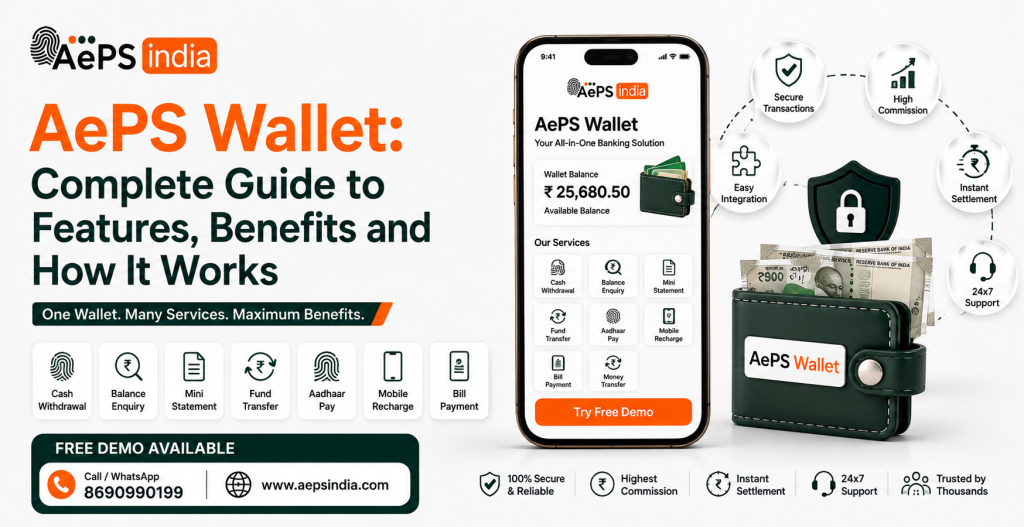
Are you looking for a reliable AePS Wallet to manage transaction balances, retailer funds, commissions, and daily AePS business operations from one centralized platform? For businesses running an Aadhaar Enabled Payment System network, manual balance tracking and separate financial records can make daily operations difficult. A well designed AePS Wallet Software helps simplify wallet management by providing a structured system for monitoring credits, debits, transaction records, and user balances.
An AePS Wallet (Aadhaar Enabled Payment System Wallet) is a digital Aeps platform or service account used by micro ATM operators, business correspondents, or local merchants to process cardless, PIN-free banking transactions using a customer’s Aadhaar number and biometric verification.
Unlike a traditional digital wallet where you pre-load money, an AePS-enabled system acts as an interface linked to a bank account or a merchant settlement ledger managed by Aeps india. It allows cash-in/cash-out services directly at local retail touchpoints.
An AePS Wallet can be an important part of an AePS Portal, B2B AePS Software, or Aeps fintech platform. Depending on the business model and software configuration, administrators can manage retailer wallets, monitor balance movements, review transaction history, control authorized wallet operations, and maintain clear financial records from a single dashboard.
AEPS India provides AePS Wallet and AePS Software solutions for businesses that need a centralized system for managing their AePS operations. The Aeps platform can be configured with modules such as wallet management, retailer and distributor management, transaction monitoring, Aeps commission management, reports, and Aeps administrative controls according to business requirements and the applicable service integration.
For a growing AePS business, choosing the right Aeps wallet management system is not only about showing the available balance. Businesses should also consider transaction tracking, ledger visibility, role-based access, reporting, security controls, reconciliation workflows, and Aeps software scalability. These features can help administrators maintain better operational control as their retailer and distributor network grows.
Whether you are planning to launch a new AePS business, upgrade an existing best AePS portal, integrate Aeps wallet management into your Aeps b2b software, or build a complete B2B AePS platform, AEPS India can help you identify a suitable AePS Wallet and AePS Management Software solution based on your business requirements.
In this complete guide, you will learn what an AePS Wallet is, how AePS wallet management works, its key features, benefits, retailer wallet management, transaction tracking, security considerations, and how to choose the right AePS Wallet Software for your business.
What is an AePS Wallet?
An AePS (Aadhaar Enabled Payment System) wallet or portal is a digital banking service framework that allows users to perform basic financial transactions using their Aadhaar number and biometric authentication (fingerprint or iris scan) through a local banking agent or micro-ATM.
Rather than acting as a traditional stored-value digital wallet (like Paytm or PhonePe), an AePS system connects directly to a user’s bank account linked to their Aadhaar card.
How Does an AePS Wallet Work?
An Aadhaar Enabled Payment System (AePS) wallet allows local agents or retailers to process basic banking and cash transactions using biometric authentication.
How an AePS Wallet Works
- Agent Setup: A shopkeeper or business correspondent registers with an Official NPCI Product partner or fintech platform to maintain a working merchant wallet balance.
- Customer Identification: The customer provides their 12-digit Aadhaar number and selects their bank name at the agent’s micro-ATM or POS terminal.
- Biometric Verification: The customer scans their fingerprint or iris on a biometric device to confirm their identity.
- Real-Time Routing: The National Payments Corporation of India (NPCI) routes the request securely to the Unique Identification Authority of India (UIDAI) for identity matching and then to the user’s bank.
- Instant Settlement: Once approved, cash is dispensed by the agent, and the transaction amount is instantly settled in real-time (T+0) inside the retailer’s AePS wallet along with a commission.
AePS Services Available Through an AePS Wallet
An Aadhaar Enabled Payment System (AePS) wallet allows customers to perform basic, cardless banking transactions using their Aadhaar number and biometric verification.
Available AePS Services
- Cash Withdrawal: Get physical cash from your bank account at a local micro ATM or business correspondent.
- Cash Deposit: Deposit money directly into an Aadhaar-linked bank account through an authorized agent.
- Balance Enquiry: Check your current bank account balance instantly.
- Mini Statement: View recent transaction history and the updated account balance.
- Aadhaar to Aadhaar Fund Transfer: Send money from one Aadhaar-linked account to another.
- BHIM Aadhaar Pay: Make merchant payments using biometric authentication.
Who Needs an AePS Wallet Solution?
An AePS wallet solution is needed by local retailers, fintech businesses, and banking correspondents who want to offer cardless, biometric cash withdrawals, deposits, and balance checks to customers.
Who Needs an AePS Wallet Solution?
- Local Kirana and Retail Shops: Small shop owners in rural and semi-urban areas use top AePS portal to turn their shops into mini-banks, earning commissions on cash withdrawals and deposits.
- Business Correspondents (BCs) and Agents: Authorized bank agents need best AePS software to provide doorstep or kiosk-based banking services where traditional bank branches or ATMs are missing.
- Fintech Startups and Software Providers: Aeps india building financial technology Aeps platform need white label AePS API integrations to offer secure, Aadhaar-authenticated banking services to their merchant networks.
- Micro-ATM and Service Kiosk Operators: Operators who provide basic financial services in remote locations require an integrated Aeps wallet system to manage real-time Aeps agent commission and transaction settlements.
Documents Required for AePS Wallet
To register for an AePS (Aadhaar Enabled Payment System) merchant or agent wallet, you must submit basic KYC identity documents, business proofs, and a certified Aeps biometric device.
Mandatory KYC Documents
- Aadhaar Card: Serves as primary identity and address proof, and must be linked to your active mobile number.
- PAN Card: Required for tax tracking and financial compliance.
- Bank Account Details: A cancelled cheque, bank statement, or the first page of your passbook to receive commission settlements.
- Passport-sized Photographs: Recent clear photos with a neutral background.
- Active Contact Info: A functional mobile number and email address for OTP verifications and login alerts.
Business & Address Proofs
- Shop/Business Proof: Documents like a GST registration, Udyam Registration, or Shop & Establishment Certificate.
- Address Verification: A recent utility bill (electricity or water) or a valid rent agreement for your outlet.
Required Hardware
- Biometric Scanner: A UIDAI-certified, registered fingerprint or iris scanner (such as Mantra).
- Digital Device: A working smartphone, laptop, or desktop computer with internet access.
Top Use Cases of AePS Wallet
The top use cases of the Aadhaar Enabled Payment System (AePS) center around cardless, PIN-free, and biometric-secured banking managed through local business correspondents and micro ATM device.
Key Use Cases of AePS
- Cash Withdrawal and Deposit (Mini-ATM): Local retail shops act as banking touchpoints, allowing users to withdraw or deposit cash instantly using only their Aadhaar number and fingerprint.
- Balance Inquiry and Mini-Statement: Users can check their live bank account balance and review recent transaction logs without visiting a physical bank branch.
- Direct Benefit Transfer (DBT): Government welfare funds, pensions, and subsidies are securely credited and accessed locally by beneficiaries through biometric verification.
- Aadhaar Pay (Merchant Payments): Merchants accept digital payments directly from a customer’s bank account using a fingerprint or iris scan, bypassing cards or PINs.
- Aadhaar-to-Aadhaar Fund Transfers: The best Aeps system facilitates secure, immediate interbank or intrabank transfers between two accounts linked to Aadhaar.
- eKYC and Customer Onboarding: Financial institutions use AePS infrastructure for instant, paperless, and secure identity verification during account creation.
Key Aspects of AePS Wallet
The Aadhaar Enabled Payment System (AePS) is a bank-led model that lets users perform basic financial transactions using their Aadhaar number and biometric verification.
Key Aspects of AePS
- Biometric Authentication: Users authorize transactions using a Aeps fingerprint or Aeps iris scan, meaning no physical debit card, credit card, or PIN is required.
- Interoperability: Customers can access their bank accounts and complete transactions through any AePS Touchpoint Operator or micro ATM software, regardless of which bank holds their account.
- Core Banking Services: Supports essential services like cash withdrawals, cash deposits, balance inquiries, mini-statements, and fund transfers.
Financial Inclusion: Designed to bring basic financial services to rural and underserved communities where traditional brick-and-mortar bank branches or ATMs are scarce.
Government Benefit Transfers: Facilitates direct disbursement of government welfare schemes, subsidies, and social security pensions (such as MNREGA funds) via Aadhaar verification.
Regulatory Security: Operates under the oversight of the National Payments Corporation of India (NPCI) and follows strict security and privacy standards.
Why is an AePS Wallet Important for an AePS Business?
An AePS wallet (Aadhaar Enabled Payment System wallet) acts as a centralized digital pool where merchant commissions, cash withdrawal settlements, and liquidity floats are managed for everyday operations.
Why an AePS Wallet is Important
- Instant Commission Credit: Agents and merchants receive real-time commissions or margins directly into their designated wallet immediately after a successful cash withdrawal, balance inquiry, or fund transfer.
- Working Capital Management: It functions as a revolving fund, enabling micro ATM System or business correspondent operators to disburse cash locally and balance their operational liquidity without visiting a physical bank branch repeatedly.
- Settlement and Payout Flexibility: Operators can use the wallet balance to initiate instant payouts, move funds to their primary bank accounts via IMPS/NEFT, or use the balance for utility bill payments and mobile recharges.
- Transaction Tracking: It maintains a digital ledger of all micro-transaction logs, helping small business owners reconcile daily cash flows, track earnings, and audit customer transactions easily.
- Operational Continuity: A well-funded wallet ensures that customer cash-out requests are never declined due to delayed banking settlement cycles, boosting business trust and reliability.
AePS Wallet for Retailers, Distributors and Admins
An AePS wallet system uses a multi-tiered digital architecture to provide micro-banking services like cash withdrawals and balance checks through local shops.
Roles in the AePS Wallet Hierarchy
- Retailers (Agents): Local shop owners who use a certified Aeps biometric scanner to process customer cash withdrawals, balance inquiries, and mini-statements, earning a direct commission per transaction.
- Distributors: Regional managers or master distributors responsible for Aeps onboarding local retail agents, handling physical or digital KYC verifications, and supplying operational liquidity and wallet balancing.
- Admins (Central Platform/Fintech): The central command center that controls core Aeps API connections to banking servers, maintains regulatory compliance with the National Payments Corporation of India (NPCI), sets master Aeps commission slabs, and manages automated wallet settlements.
Wallet Functions and Management
- Dual-Wallet Setup: Top Aeps System typically separate funds into a main utility wallet (for recharges and bill payments) and an AePS transaction wallet.
- Real-Time Splits: When a customer completes a transaction, the software automatically divides and credits commissions to the retailer, distributor, and admin wallets instantly.
- Liquidity and Payouts: Best Aeps Admin oversee the automated settlement of funds from banking partners back down through the chain to ensure smooth daily liquidity for agents.
AePS Wallet for Retailers, Distributors and Admins
Management Portal| Transaction ID | User Role | Amount | Status | Date |
|---|---|---|---|---|
| #TXN99012 | Retailer | ₹ 2,000 | Success | 2026-09-05 |
| #TXN99013 | Distributor | ₹ 15,000 | Success | 2026-09-05 |
| #TXN99014 | Admin | ₹ 50,000 | Success | 2026-09-04 |
AePS Wallet Software for B2B Businesses
AePS (Aadhaar Enabled Payment System) wallet software for B2B businesses is a white-label or best Aeps API-driven Aeps service platform that lets companies offer micro-banking services like cash withdrawals, deposits, and balance checks using biometric Aadhaar authentication.
Core Features
- Biometric Authentication: Uses fingerprint or iris scanners linked with UIDAI and NPCI for secure, cardless transactions.
- Hierarchical Wallet Management: Aeps Admin panel control super distributors, distributors, and local retail agents.
- Real-Time Commission Engine: Automatically calculates and credits margins for every transaction across the network funnel.
- Instant Settlements: Moves funds directly into agent or merchant wallets immediately after processing.
- Device Compatibility: Integrates smoothly with standard biometric hardware like Mantra via Android Aeps apps and web Aeps dashboards.
Business Models
- White-Label Solution: Run the entire fintech ecosystem under your own brand name and custom mobile Aeps app.
- API Integration: Embed AePS banking capabilities directly into your existing Aeps software infrastructure.
AePS Wallet Software for B2B Businesses
B2B Enterprise Edition| Business Partner | Wallet Balance | Total Txns | Revenue Share | Status |
|---|---|---|---|---|
| FinTech Solutions Ltd | ₹ 4,50,000.00 | 12,400 | ₹ 15,200.00 | Active |
| Global Pay Services | ₹ 1,20,000.00 | 5,600 | ₹ 6,800.00 | Active |
| Rural Digital Hub | ₹ 45,000.00 | 2,100 | ₹ 2,100.00 | Pending |
| Apex Business Corp | ₹ 8,000.00 | 400 | ₹ 400.00 | Suspended |
| Neo Wallet Systems | ₹ 7,10,000.00 | 25,000 | ₹ 32,000.00 | Active |
Why Is AePS Wallet Management Important for Businesses?
AePS wallet management is vital for businesses because it automates liquidity control, tracks agent commissions, and ensures real-time settlement of cardless biometric transactions.
Why AePS Wallet Management Matters
- Real-Time Liquidity Control: Manages main working balances so retail agents or micro ATM operator have liquid funds ready to disburse cash instantly.
- Automated Commission Tracking: Credits per-transaction margins and earnings straight into sub-wallets right after a successful transaction.
- Instant Fund Settlement: Powers fast T+0 or round-the-clock wallet-to-bank and bank-to-wallet transfers to keep business cash flow steady.
- Regulatory and Escrow Safety: Secures pooled merchant funds in compliant accounts to meet strict national banking rules.
- Clear Transaction Visibility: Gives administrators robust reporting tools to monitor daily volumes, reduce manual errors, and track distributor networks.
Learn more about features on Aeps commission platform like AePS India to see how these systems structure agent ledgers and settlement engines.
Benefits of Using an AePS Wallet
The Aadhaar Enabled Payment System (AePS) lets you complete basic banking tasks using just your Aadhaar number and your fingerprint.
Key Benefits
- No Cards or PINs Needed: You do not need to carry a debit card, remember a secret code, or use a smartphone. Your unique fingerprint acts as your password.
- High Security: Biometric verification through the Unique Identification Authority of India ensures that only you can access your money, which greatly lowers the risk of fraud.
- Local Banking Access: You can visit nearby local shops and business helpers equipped with best micro ATM instead of traveling far to a bank branch.
- Full Interoperability: You can use any bank’s Aadhaar-linked account at any bank’s micro ATM App or touchpoint.
- Financial Inclusion: It brings simple financial services to rural areas and helps people who do not use traditional banking apps.
- Multiple Services Available: You can check your account balance, withdraw or deposit cash, and get a mini statement of your recent transactions.
Features AePS Wallet
Aadhaar Enabled Payment System (AePS) wallet and Aeps platform features allow cardless and PIN-free banking transactions using an Aadhaar number and biometric verification. Managed by the National Payments Corporation of India, the system links financial services directly to a user’s bank account or an agent’s real-time digital liquidity wallet.
Core Banking & Wallet Features
- Biometric Authentication: Verifies user identity securely using unique fingerprint or iris scans via UIDAI records.
- Cardless & PIN-Free: Eliminates the need for physical debit cards, credit cards, or secret passwords.
- Interoperable Network: Connects customers of any participating bank to best micro ATM software or business correspondent kiosks managed by any other bank.
- Multi-Service Access: Supports cash withdrawals, cash deposits, balance inquiries, and mini-statements.
- Fund Transfers: Facilitates Aadhaar-to-Aadhaar and domestic money transfers directly from the point of service.
Agent & Business Wallet Capabilities
- Real-Time Settlement (T+0): Credits merchant and agent digital wallets instantly upon a successful biometric transaction.
- Live Dashboard Tracking: Provides operators a control panel to monitor transaction flows, check wallet balances, and track commission slabs.
- Integrated Utility Payments: Enables agents and users to route withdrawn funds immediately into utility bill payments via the BBPS Software.
AePS Wallet Integration With AEPS Software
Integrating AePS wallet into your application involves registering with an Aeps india, setting up biometric hardware, and writing backend secure Aeps API calls for real-time settlement.
1. Prerequisites and Documentation
- Business Registration: Submit corporate proof such as a GST certificate, Udyam registration, or shop license.
- KYC Compliance: Complete individual and operator KYC using the owner’s PAN and Aadhaar-linked mobile number.
- Settlement Account: Link a valid bank account, passbook, or cancelled cheque for receiving funds.
2. Partner Onboarding & Credentials
- Select Aeps india: Partner with a Aeps india.
- API Keys: Sign agreements and receive your Merchant ID (MID), Aeps API secret keys, and technical Aeps API documentation.
3. Biometric Device (RD Service) Setup
- Hardware: Acquire a UIDAI-certified L1 biometric Aeps fingerprint or buy Aeps iris scanner (such as Mantra).
- Integration: Install the Registered Device (RD) service driver on your web or best mobile Aeps app to securely capture encrypted
PidData.
4: Setup or Integrate the Platform
- For Retailers/Agents: Download the Aeps official mobile Aeps application or log into their web portal using your approved Aeps Agent ID.
- For Developers/Enterprise: Request sandbox credentials, Aeps Merchant ID (MID), and REST/JSON Aeps API documentation from Aeps india to embed cash withdrawal, balance inquiry, and mini-statement features directly into your Aeps app.
5. Technical Integration
- Frontend UI: Build interface fields for customer Aadhaar number, bank name/IIN (Institution Identification Number), and transaction type (cash withdrawal, balance check).
- Backend Payloads: Send encrypted REST/JSON payloads containing biometric blocks and transaction requests through the Aeps india.
- Wallet Management: Configure a double-wallet system to segregate incoming transaction credits and Aeps commission margins.
6. Testing and Going Live
- Sandbox Testing: Run mock success, failure, and invalid biometric scenarios in a staging environment.
- Production: Switch to Aeps API live production endpoints once testing succeeds to enable real-time T+0 or T+1 settlements.
How Much AePS Wallet Cost
An Aadhaar Enabled Payment System (AePS) wallet and Aeps API cost structure typically includes setup fees from ₹12,000 to ₹35,000, annual maintenance from ₹10,000 to ₹40,000, and per-transaction fees or commissions ranging from ₹0.25 to ₹15.
Setup and Software Costs
- One-time Integration/Setup Fee: ₹12,000 to ₹35,000 for standard or white label AePS API integration.
- White-Label Portal/Software Cost: ₹15,000 to ₹1,20,000+ depending on custom features and branding.
- Annual Maintenance Fee: ₹10,000 to ₹40,000 billed yearly for server upkeep and technical support.
Transaction and Processing Fees
- NPCI Settlement Fee: Flat ₹0.25 per transaction.
- Interbank Interchange Fees: Generally around ₹5 for cash withdrawals, ₹1 for balance inquiries, and up to ₹10 for deposits, settled between issuing and acquiring banks.
- Customer Charges: Often free for the first 3 to 5 transactions per month, followed by ₹15 + GST per extra transaction depending on the bank or touchpoint operator.
AePS Wallet Charges & Commission
AePS wallet charges and retailer commissions depend on the transaction amount slab and the Aeps india.
Retailer Commission Slabs (Earnings)
- Tiered Slabs: Credits slab-based flat fees or percentages depending on the transaction size, rewarding higher cash withdrawals.
Typical Retailer Earnings: Ranges from ₹2.00 up to ₹15.00+ per successful cash withdrawal. - Multi-Level Distribution: Automatically splits margins across operational hierarchies like Super Distributors, Master Distributors, Distributors, and Retailers.
- ₹100 to ₹999: ₹2.00 commission per withdrawal.
- ₹1,000 to ₹2,499: ₹3.00 to ₹5.00 commission.
- ₹2,500 to ₹2,999: ₹5.00 to ₹7.00 commission.
- ₹3,000 to ₹10,000: ₹10.00 to ₹15+ commission per successful withdrawal.
- Balance Inquiry / Mini Statement: ₹1.00 to ₹5.00 per transaction.
- Aadhaar Pay: Up to 1% merchant commission or charged directly to the customer.
Customer Fees & Limits
- Cash Withdrawal Limit: Capped at ₹10,000 per single transaction.
- Customer Service Fee: Often free for basic or home-bank transactions, but local agents may charge ₹10 to ₹20 to manage cash flow and handling.
- Settlement: Aeps platforms offer instant or same-day (T+0) wallet settlement. You can compare top Aeps software integration models through Aeps service portal like Aeps India.
Retail Agent & Merchant Commissions
- Slab-Based Earnings: Retailers earn tiered commissions on cash withdrawals, such as ~₹2 for ₹100–₹999, ~₹3 for ₹1,000–₹1,499, and up to ₹13–₹15+ for ₹3,000–₹10,000.
- Aadhaar Pay: Merchants can charge up to 1% of high-value transaction amounts up to ₹50,000.
- Balance Checks: Earning Aeps commissions or flat fees of ₹0.50 to ₹5 per inquiry for agents.
How to Start an AePS Business With an AePS Wallet
You can start AePS business by registering as a merchant or agent with a certified Aeps india, setting up a certified biometric device, and managing your daily cash-in/cash-out operations through an integrated AePS digital wallet.
Step-by-Step Setup Process
- Choose a Aeps india: Sign up with an authorized Aeps india
- Complete KYC: Submit your digital PAN, Aadhaar, photo, and bank details for verification.
- Get Your Merchant ID: Wait 24 to 48 hours for document approval and activation of your merchant profile.
- Install the App and Hardware: Download the Android Aeps application or web portal, plug in best Aeps biometric scanner, and install the required device drivers.
- Start Transacting: Enter a customer’s Aadhaar number, choose their bank, select a service (like a cash withdrawal or balance check), and capture their fingerprint for real-time verification. Successful transactions instantly credit your digital wallet and earn Aeps commission.
AePS Wallet Admin Panel
An AEPS Admin Portal is a centralized Aeps software dashboard used by fintech businesses to manage micro-banking networks, track biometric transactions, and configure user wallets.
Key Features
- Wallet & Ledger Management: Tracks master wallet balances, credit limits, and real-time fund movements.
- User Hierarchy Control: Manages multi-level networks including Super Distributors, Distributors, and Retailers.
- Commission Slabs: Sets automated, tiered commission and surcharge rules for every user tier.
- Transaction Monitoring: Views live logs for cash withdrawals, balance inquiries, and mini-statements using unique reference numbers.
- Agent Onboarding: Handles digital Aeps KYC verification and document approvals for new members.
- Fund Settlements: Executes automated bank payouts to maintain liquidity for the network.
AePS Wallet Admin Panel
| Agent ID | Agent Name | Wallet Balance | Daily Volume | Account Status |
|---|---|---|---|---|
| #AGNT-1001 | Rajesh Kumar | ₹ 12,500.00 | ₹ 4,200.00 | Active |
| #AGNT-1002 | Amit Sharma | ₹ 8,200.00 | ₹ 1,100.00 | Active |
| #AGNT-1003 | Suresh Verma | ₹ 0.00 | ₹ 0.00 | Pending |
| #AGNT-1004 | Vikram Singh | ₹ 4,500.00 | ₹ 800.00 | Blocked |
| #AGNT-1005 | Priya Das | ₹ 22,100.00 | ₹ 12,000.00 | Active |
How AePS Wallet Management Works in an AEPS Business
An AePS wallet management system handles the digital flow of funds, retailer commissions, and bank payouts for Aadhaar-enabled financial transactions.
How the Wallet Workflow Operates
- Transaction Initiation: A merchant enters the customer’s Aadhaar number, bank name, and requested amount into an application.
- Biometric Authentication: The customer scans their fingerprint on a certified device to verify identity through UIDAI and NPCI.
- Instant Credit: Once the customer’s bank authorizes the withdrawal, the system instantly credits the merchant’s operational wallet with the cash amount plus earned Aeps commission.
- Fund Settlement: Accumulated balances move from the internal ledger to the merchant’s personal bank account via automated same-day (T+0) or next-day (T+1) settlements.
Core Components of the System
- Double-Wallet Architecture: Separates operational float (main wallet for bill payments/recharges) from cash-in/cash-out settlement pools (AePS wallet).
- Ledger Tracking: Maintains a real-time digital passbook of every credit, debit, and commission slab earned per transaction.
- Liquidity Control: Allows distributors to manage and push working capital and cash-load limits down to active merchant profiles.
AePS Wallet Management Process
Add Funds
Wallet recharge and fund loading
Assign Balance
Balance allocation to AEPS agents
Process AEPS
Customer transaction processing
Settle Funds
Transaction settlement and reconciliation
AePS Wallet as Part of a Complete AePS Software Solution
An AePS wallet management system is the core financial ledger within a complete AePS Software Solution that controls agent liquidity, real-time transaction settlements, and commission tracking for biometric banking.
Key Components of an AePS Wallet Solution
- Main Working Balance: Holds liquid funds that top micro ATM operators or agents use to disburse physical cash during customer withdrawals.
- Commission Ledger: Automatically credits per-transaction margins and earnings directly to the agent or distributor sub-wallet upon a successful scan.
- Settlement Engine: Handles instant or real-time T+0 transfers moving funds seamlessly between the Aeps earning platform wallet and designated bank accounts.
- Escrow Link: Secures pooled merchant and customer funds to maintain compliance with regulatory guidelines.
How Wallet Operations Work
- Transaction Trigger: A customer requests a cash withdrawal using their Aadhaar number and Aeps fingerprint scan at a retailer terminal.
- Bank Approval: The request routes securely through the NPCI network to the user’s home bank for biometric validation.
- Instant Credit: Once approved, the customer’s bank account is debited, and the Aeps agent platform working wallet is credited immediately.
AePS Wallet and Transaction Management
Aadhaar Enabled Payment System (AePS) wallet and transaction management allows merchants and business correspondents to handle cardless, PIN-free banking services using biometric verification.
Core Wallet Management Features
- Real-Time Settlement: Instantly transfers collected funds or commissions from the Aeps portal wallet to the agent’s registered bank account.
- Wallet Ledger: Tracks running credit/debit entries, daily operational limits, and available float balance.
- Commission Tracking: Automatically credits commissions for every successful cash withdrawal, balance check, or mini-statement.
Transaction Management Features
- Supported Services: Processes cash withdrawals, cash deposits, balance inquiries, and mini statements via National Payments Corporation of India (NPCI) guidelines.
- Authentication: Uses customer Aadhaar numbers paired with fingerprint or iris scanner verification.
- Status Monitoring: Provides real-time success or failure logs to ensure high transaction completion rates.
AePS Wallet and Transaction Management
| Transaction ID | Date & Time | Transaction Type | Amount | Status |
|---|---|---|---|---|
| #TXN55210 | 05-Sep-2026 14:20 | Cash Withdrawal | – ₹ 2,000.00 | Success |
| #TXN55215 | 05-Sep-2026 13:45 | Balance Inquiry | – ₹ 1.00 | Success |
| #TXN55220 | 05-Sep-2026 12:10 | Cash Deposit | + ₹ 5,000.00 | Pending |
| #TXN55225 | 05-Sep-2026 11:00 | Cash Withdrawal | – ₹ 1,000.00 | Failed |
| #TXN55230 | 05-Sep-2026 10:15 | Wallet Top-up | + ₹ 10,000.00 | Success |
AePS Wallet Commission Management
An Aadhaar Enabled Payment System (AePS) wallet and Aeps commission management system automatically tracks, configures, and credits per-transaction margins and fund settlements for cardless biometric banking.
Core Wallet Management Structure
- Double-Wallet Architecture: Separates operational working funds from real-time commission earnings to maintain transparent ledgers.
- Main & Working Wallets: Holds liquid funds required by best micro ATM system or agent touchpoints to disburse physical cash to customers.
- Settlement Engine (T+0 / T+1): Processes instant or scheduled bank-to-wallet and wallet-to-bank account transfers to preserve agent liquidity.
AePS Wallet Commission Management
| Transaction ID | Customer Aadhaar | Txn Amount | Commission | Payment Status |
|---|---|---|---|---|
| #TXN88120 | XXXX-XXXX-1234 | ₹ 2,000.00 | ₹ 10.00 | Paid |
| #TXN88125 | XXXX-XXXX-5678 | ₹ 5,000.00 | ₹ 25.00 | Paid |
| #TXN88130 | XXXX-XXXX-9012 | ₹ 1,000.00 | ₹ 5.00 | Pending |
| #TXN88135 | XXXX-XXXX-3456 | ₹ 10,000.00 | ₹ 50.00 | Paid |
AePS Wallet Management Through an Admin Panel
An Aadhaar Enabled Payment System admin panel manages liquidity wallets, multi-tiered commission splits, and automated bank settlements for micro-banking networks.
Core Wallet Management Features
- Multi-Wallet Architecture: Separates main operational liquidity, commission earnings, and escrow funds across the network.
- Real-Time Ledger Controls: Tracks digital fund flows, debits, and credits instantly via automated ledgers.
- Automated Commission Splits: Distributes transaction margins instantly to retailer, distributor, and master Aeps admin wallets upon success.
- Fund Settlements (T+0 / T+1): Moves accumulated wallet balances safely into designated primary bank accounts through integrated payout systems.
- Hierarchy and Credit Limits: Sets custom credit ceilings and overdraft limits for super distributors, distributors, and local agents.
Administrative Controls & Security
- Transaction Monitoring: Views live status logs using unique Retrieval Reference Numbers (RRN) to identify and flag failures.
- Dispute Resolution: Manages chargebacks and reverses failed biometric authentication requests.
- Access Restrictions: Enforces Role-Based Access Control (RBAC) and IP whitelisting to secure financial data.
AePS Wallet Admin Panel
| Agent ID | Wallet Balance | Limit | Status | Action |
|---|---|---|---|---|
| #AG-9921 | ₹ 12,500 | ₹ 50,000 | Active | Manage |
| #AG-8843 | ₹ 2,100 | ₹ 20,000 | Active | Manage |
| #AG-7710 | ₹ 0 | ₹ 10,000 | Pending | Manage |
| #AG-6621 | ₹ 45,000 | ₹ 1,00,000 | Active | Manage |
Security Features for AePS Wallet Management
AePS (Aadhaar Enabled Payment System) wallet and Aeps portal management uses robust, multi-layered security frameworks to protect transactions, agent ledgers, and user privacy.
Core Security Features
- Biometric Authentication: Verifies user identity via unique fingerprint or iris scans processed securely through UIDAI records, eliminating cards and PINs.
- Two-Factor Authentication (2FA): Enforces strict login and transaction authorization for merchants and administrators using physical biometrics or secure credentials.
- Device Binding: Locks the AEPS API Services application or terminal to a specific, STQC-certified Aeps biometric hardware device to block spoofing.
- End-to-End Data Encryption: Encrypts sensitive financial data and biometric streams instantly during transit from the scanner to central switching networks.
- Centralized Routing & Compliance: Operates via NPCI central switches and follows strict RBI guidelines for fraud prevention and instant ledger settlements.
Wallet & Ledger Controls
- Real-Time Transaction Tracking: Monitors live cash movements and audit trails via unique Retrieval Reference Numbers (RRN).
- Automated Liquidity Management: Supervises main liquidity wallets and controls automated or manual T+0/T+1 bank settlements safely.
Security Features for AePS Wallet Management
| Security Protocol | Implementation | Check Interval | Status |
|---|---|---|---|
| Wallet Hashing | SHA-512 Algorithm | Continuous | SECURE |
| API Gateway | SSL/TLS 1.3 | Every Request | SECURE |
| Admin Access | Role-Based (RBAC) | Daily Audit | SECURE |
| Data Redundancy | Real-time Mirroring | Hourly | SECURE |
AePS Wallet Ledger and Reporting
An AePS (Aadhaar Enabled Payment System) wallet ledger and reporting system tracks micro-banking cash flows, agent commissions, and bank settlements.
Core Wallet & Ledger Functions
- Double-Wallet Structure: Separates operational funds into an AePS Wallet (for biometric cash withdrawals, deposits, and pay) and a Main Wallet (for utility services and recharges).
- Real-Time Passbook: Records every debit, credit, top-up, and commission payout instantly with unique RRN (Retrieval Reference Number) tracking.
- Settlement Engine: Manages fund movements between the AePS nodal bank and agent bank accounts via T+0 or T+1 instant settlements.
Reporting & Analytics Features
- Audit Trails: Generates downloadable logs tracking success, pending, and failed biometric transaction states.
- Commission Tracking: Details automated slab-wise agent earnings and TDS deductions across multi-tier networks (Retailers to Master Distributors).
- Reconciliation Tools: Matches local ledger logs with central switches like NPCI and sponsor bank statements to resolve disputes.
AePS Wallet Ledger and Reporting
| Transaction ID | Date & Time | Type | Amount | Status |
|---|---|---|---|---|
| #TXN984412 | 05-Sep-2026 14:20 | Cash Withdrawal | – ₹ 2,000.00 | Success |
| #TXN984415 | 05-Sep-2026 13:45 | Balance Inquiry | – ₹ 1.00 | Success |
| #TXN984420 | 05-Sep-2026 12:10 | Cash Deposit | + ₹ 5,000.00 | Pending |
| #TXN984425 | 05-Sep-2026 11:00 | Cash Withdrawal | – ₹ 1,000.00 | Failed |
| #TXN984430 | 05-Sep-2026 10:15 | Wallet Top-up | + ₹ 10,000.00 | Success |
AePS Wallet vs Manual Balance Management
An AePS (Aadhaar Enabled Payment System) Wallet is an automated, digital account used by business correspondents or merchants to instantly receive and manage cash-out funds from customers. In contrast, Manual Balance Management relies on human intervention, spreadsheets, and physical bank visits to track and move funds.
Here is a direct comparison of how they operate:
| Feature | AePS Wallet | Manual Balance Management |
|---|---|---|
| Settlement Speed | Instant and automated. | Delayed (depends on bank hours). |
| Error Risk | Extremely low due to system automation. | High due to human data entry mistakes. |
| Labor Needed | None; runs on software. | High; requires continuous updating. |
| Liquidity Access | 24/7/365 availability. | Restricted to banking/working hours. |
| Record Keeping | Digital logs generated in real time. | Manual ledgers or spreadsheets. |
Core Benefits of AePS Wallets
- Real-time updates: Funds reflect immediately after a customer scans their fingerprint.
- Higher efficiency: Eliminates the need to count cash or manually log transaction IDs.
- Auto-reconciliation: Discrepancies are automatically flagged by the system.
Core Challenges of Manual Management
- Cash trapping: Funds stay locked in bank accounts until someone manually transfers them.
- Tracking blindspots: Hard to track multiple agents or sub-agents without real-time tools.
- Scalability limits: Heavily restricts business growth due to administrative bottlenecks.
AePS Wallet vs Digital Wallet
An AePS Wallet (Aadhaar Enabled Payment System) and a standard Digital Wallet (e-wallet) serve different purposes and target different user groups, primarily based on how they verify your identity and access your funds.
Here is a direct comparison between the two:
| Feature | AePS Wallet | Digital Wallet (e-Wallet) |
|---|---|---|
| Core Technology | Biometric authentication via Aadhaar data | Mobile apps using PINs, passwords, or device biometrics |
| Hardware Needed | Biometric scanner (at a merchant or micro-ATM) | Smartphone with an active internet connection |
| Primary User Base | Rural and underbanked populations | Urban and tech-savvy users |
| Linked Source | Directly links to your Aadhaar-seeded bank account | Links to cards, bank accounts, or holds pre-funded cash |
| Internet Requirement | Required by the merchant, not the user | Required by the user to make a transaction |
| Key Services | Cash withdrawal, cash deposit, balance inquiry | Online shopping, bill payments, peer-to-peer transfers |
| Examples | Aeps india (used by local shopkeepers) | Paytm, Google Pay, PhonePe, Apple Pay |
AePS Wallet Demo – See the Wallet Management System
An AePS Wallet Management System is a digital platform used by business correspondents, agents, and merchants to manage funds earned through Aadhaar-based banking transactions (like cash withdrawals, balance inquiries, and mini-statements).
Below is a conceptual demo and breakdown of how an AePS Wallet Management System functions, its core architecture, and its primary features.
System Architecture & Workflow
An AePS wallet operates as a bridge between the retail agent, the National Payments Corporation of India (NPCI), and the banks.
- Transaction: A customer provides their Aadhaar number and biometric scan to withdraw ₹2,000.
- Authentication: The system routes the request via NPCI to UIDAI and the customer’s bank.
- Settlement: The bank debits the customer. The top AePS system instantly credits ₹2,000 + commission into the agent’s digital wallet.
- Disbursal: The agent hands ₹2,000 physical cash to the customer.
AePS Transaction Flow
Core Dashboard Features
A standard AePS wallet management dashboard contains four main modules:
1. Wallet Balances
- AePS Wallet: Holds the digital money received from successful Aadhaar withdrawals.
- Main Wallet: Used by the agent to buy services like mobile recharges, Best BBPS service and air tickets.
- Move-to-Bank (Payout): A one-click feature to transfer the AePS wallet balance into the agent’s actual personal bank account via IMPS or NEFT.
2. Transaction Management
- Real-time Ledger: A detailed passbook showing every credit, debit, and opening/closing balance.
- Commission Matrix: Automatically calculates and displays the commission earned per slab (e.g., earning ₹5 on a ₹2,000 withdrawal).
- Status Tracker: Displays real-time updates on transactions (Success, Failed, or Pending).
3. Agent & Merchant Management (Admin View)
- KYC Onboarding: Video KYC and Aadhaar verification for new agents.
- Credit Limits: Admins can set maximum daily transaction or withdrawal limits for specific agents.
- Device Management: Whitelisting registered buy Aeps biometric scanners (Mantra) complying with UIDAI L1 standards.
4. Dispute & Reconciliation
- Auto-Refunds: Tracks failed transactions where money was debited from the customer but not credited to the wallet.
- Chargeback Tools: Raises tickets directly to NPCI for swift resolution.
AePS Wallet Demo – See the Wallet Management System
Live System Demo| Reference No. | Transaction Date | Activity | Amount | Status |
|---|---|---|---|---|
| #WLT-88421 | 05-Sep-2026 11:30 | Cash Withdrawal | – ₹ 3,000.00 | Completed |
| #WLT-88425 | 05-Sep-2026 10:15 | Wallet Top-up | + ₹ 10,000.00 | Completed |
| #WLT-88430 | 05-Sep-2026 09:45 | Commission Credit | + ₹ 12.00 | Completed |
| #WLT-88438 | 05-Sep-2026 08:20 | Cash Withdrawal | – ₹ 1,500.00 | Processing |
Common AePS Wallet Problems and Solutions
The Aadhaar Enabled Payment System (AePS) is a critical tool for financial inclusion, but banking correspondents (BCs), retailers, and customers frequently face operational bottlenecks.
The most common AePS wallet problems and their direct solutions are categorized by the nature of the issue below.
1. Biometric Authentication Failures
Biometric mismatches are the leading cause of transaction failures, often appearing as Error Code: AE092 or “Biometric Data Did Not Match”.
- The Problem: The user’s fingerprint fails to scan due to dry or wet skin, worn-out finger ridges (common among elderly users and laborers), or dirt on the scanner lens. Repeated failures can temporarily lock the customer’s account for 24 hours.
The Solution:
- Clean the scanner glass with a soft cloth and have the customer wash/dry their hands.
- Apply a small amount of moisturizer to dry fingers to enhance ridge visibility.
- Use Best Finger Detection (BFD) to try alternative digits (e.g., swapping thumb for index finger).
- Upgrade to STQC-certified L1 Aeps biometric scanners to meet updated UIDAI security standards.
2. “Declined by Bank” & Core Banking Errors
These errors happen when communication between the branded Aeps portal, the National Payments Corporation of India (NPCI), and the issuing bank breaks down.
- The Problem: The transaction is blocked due to insufficient account balance, unlinked (unseeded) Aadhaar data, or frozen accounts.
The Solution:
- Always perform a quick Balance Inquiry before attempting cash withdrawals to confirm available funds.
- If the account lacks a proper linkage to the NPCI mapper database, the customer must visit their home bank branch to complete Aadhaar seeding.
3. Server Downtime and Timeouts
- The Problem: Transactions lag, freeze mid-process, or timeout due to heavy traffic or internal technical updates on the UIDAI or issuer bank systems.
The Solution:
- Avoid continuous retries during server lags, as this can lock funds or block accounts. Wait 10–15 minutes before re-attempting.
- Utilize an AePS software platform that features multi-bank routing switches to automatically pivot to healthier payment gateways.
4. Transaction & Frequency Limits Exceeded
- The Problem: The portal throws errors like “Exceeds Withdrawal Frequency Limit” or “Amount Entered Is More Than Withdrawal Limit”. Banks set distinct daily caps on both transaction counts and total debit values to curb potential fraud.
The Solution:
- Advise the customer to return the next business day for the remainder of their transaction.
- Use alternative transaction options if supported, such as Aadhaar Pay Software, which often carries different limits than standard AePS cash withdrawal.
5. Internet Connectivity & Micro-ATM Glitches
- The Problem: Real-time identity verification fails due to weak mobile data or intermittent Wi-Fi at the retail shop or Micro-ATM spot.
The Solution:
- Ensure the banking agent’s mobile device or terminal maintains a stable data connection before prompting for fingerprints.
- Clear the application cache or perform a Micro ATM restart to clear active network deadlocks.
Aeps india One Of the Best AePS Wallet Provider In India
Aeps india one of the best AePS wallet provider requires evaluating key features like transaction success rates, security compliance, and payout structures to ensure reliable and profitable operations.
Here are the most important factors to consider when selecting an Aeps india:
1. Security and Regulatory Compliance
- NPCI & RBI Guidelines: Ensure the Aeps india strictly follows NPCI (National Payments Corporation of India) and RBI (Reserve Bank of India) rules.
- Biometric Security: The Fast Aeps platform must support secure L0/L1 biometric devices (like fingerprint or iris scanners) to protect against fraud.
2. Transaction Success Rate and Uptime
- High Success Rates: Aeps india that guarantees a transaction success rate of 98% or higher to build trust with your customers.
- System Uptime: Choose a Aeps earning platform that offers at least 99.9% uptime so your services do not experience downtime during peak business hours.
3. Commission Structure
- Competitive Earnings: Compare the Aeps commission rates per transaction. Aeps india offer competitive payouts (often ranging between ₹10 to ₹16 per successful transaction) depending on the transaction volume.
- No Hidden Charges: Check for any hidden setup or annual maintenance fees.
4. Fund Settlement Speed
- Instant Settlements: Aeps india that offer real-time or same-day (T+0) settlements. This ensures your working capital and liquidity stay healthy.
5. Dashboard and API Integration
- User-Friendly Dashboard: Agents and retailers need a simple best mobile Aeps app or web portal to track transaction history, check commissions, and view reports.
- Easy API Integration: If you are integrating AePS into your own website or best Aeps app, look for Aeps india that offer clear developer documentation and smooth Aeps service API support.
6. Customer Support
- 24/7 Assistance: Technical errors or transaction disputes can happen anytime. Aeps india offers reliable, round-the-clock customer and technical support.
7. Additional Services
- Bundled Services: Aeps india allow you to offer more than just cash withdrawals. Look for trusted Aeps platform that also bundle Micro-ATM, BBPS (Bharat Bill Payment System).
Why Choose Aeps india for AePS Wallet Solution?
Aeps india one of the right AePS wallet provider for an AePS wallet solution is critical for building a secure and profitable digital Aeps banking platform.
Here are the key factors you must consider when evaluating and selecting a Aeps india:
1. Security and Compliance
- NPCI Guidelines: Reliable Aeps platform is fully compliant with NPCI (National Payments Corporation of India) and UIDAI (Aadhaar) regulations.
- Data Privacy: Look for end-to-end encryption and secure biometric authentication to prevent fraud and protect sensitive user data.
2. Transaction Success Rate & Uptime
- High Uptime: Aeps india that guarantees at least 99% to 99.9% uptime to ensure your services remain active without disruption.
- Low Failure Rates: Aeps india will have minimal transaction failures, which builds trust with your agents and customers.
3. Commission and Revenue Structure
- High Margins: Compare the commission slabs per transaction. Aeps india often offer competitive payouts of up to ₹10 to ₹16 per withdrawal.
- Hidden Charges: Review the fee structure to understand setup costs, maintenance fees, and transaction charges.
4. Settlement Speed
- Instant Payouts: Aeps india that offer instant or same-day (T+0) wallet settlements. This ensures your agents have continuous working capital to run their daily business.
5. API Integration and Scalability
- Easy Integration: Aeps india should offer clear documentation and developer support for seamless integration into your existing mobile Aeps apps or web portals.
- White-Label Solutions: If you want your own branding, ensure they offer a white label Aeps platform.
- Scalability: The Trusted Aeps system should be able to handle high transaction volumes as your merchant network grows.
6. Dashboard and Reporting
- Real-Time Analytics: A robust Aeps dashboard is necessary to monitor transaction history, agent performance, and earnings in real-time.
- Easy Management: You should be able to create Member IDs, track distributors, and manage commission slabs easily from a single Aeps admin panel.
7. Customer Support
- 24/7 Assistance: Technical issues and transaction errors can happen at any time. Aeps india that offer round-the-clock technical support for both you and your agents.
Conclusion – Choose the Right AePS Wallet Solution for Your Business
An AEPS Wallet can help businesses manage the financial side of their AEPS operations through a centralized system. For a growing retailer or distributor network, manually tracking balances, credits, debits, transaction records, and service-related amounts can become difficult. A well-designed AEPS Wallet Software helps simplify these day-to-day processes by providing better visibility and control through a single platform.
For fintech companies, best AEPS service businesses, distributors, and B2B digital payment platforms, the right Aeps solution should do more than simply display a wallet balance. It should support a structured workflow for wallet management, transaction tracking, retailer and distributor accounts, balance monitoring, reports, and integration with the required Fast AEPS software or trusted Aeps API environment.
An AePS Wallet (Aadhaar Enabled Payment System Wallet) is a digital platform or service account used by banking correspondents, micro-merchants, or agents to facilitate cardless, PIN-free financial transactions linked directly to a customer’s Aadhaar-seeded bank account.
Rather than acting as a traditional stored-value digital wallet (like Paytm or PhonePe where you pre-load money), an trusted AePS system connects an agent’s or merchant’s terminal directly to the central core banking system via the National Payments Corporation of India (NPCI) using biometric authentication.
AEPS India provides AEPS Wallet and best AEPS Software solution based on business requirements. Whether you are building a new AEPS platform, expanding an existing retailer network, or looking for an integrated AEPS Wallet Management System, the solution can be planned around your required business workflow and high volume Aeps software structure.
Before choosing an AEPS Wallet solution, it is important to evaluate security controls, transaction records, user access, wallet workflows, reporting, scalability, integration capability, and technical support. The right Aeps platform should match your actual business model and make it easier to manage operations as your network grows.
If you are looking for an AEPS Wallet, AEPS Wallet Software, or a complete AEPS Management Solution, contact AEPS India to discuss your requirements and choose a solution designed for your business.
Get Started with AePS Wallet from Aeps India
Looking for a reliable AePS Wallet solution for your business? Connect with Aeps India to discuss your requirements, explore the available AePS Wallet features, and get the right solution for your business needs.
Frequently Asked Questions About AePS Wallet
An AePS Wallet is a wallet or balance-management module used within an professional Aeps software or B2B Aeps platform to help manage business balances, credits, debits, and transaction-related records. It allows authorized users to monitor available balances from a centralized system.
An AePS Wallet works as part of the Aeps commission platform‘s internal financial management workflow. When a supported transaction, fund addition, debit, refund, or adjustment is processed, the corresponding wallet record can be updated according to the platform’s configured business rules and applicable transaction status.
An AePS Wallet System can be useful for fintech businesses, B2B Aeps service provider, distributors, and retailer networks that need to manage operational balances within their software platform. User access and wallet permissions can be configured according to the business hierarchy.
Yes. An AePS Admin Portal designed to manage multiple retailer and distributor wallets from one centralized dashboard. Administrators can monitor balances, wallet transactions, credits, debits, and other authorized financial activities.
AePS Wallet Management helps businesses track and manage wallet-related activities, including balance monitoring, credit entries, debit entries, transaction records, and authorized adjustments. This can reduce manual work and provide better visibility into the financial activity of the business network.
Yes. An AePS Wallet can be integrate AePS Admin Panel so authorized administrators can manage users, monitor wallet balances, review transactions, and control permitted wallet operations from one system.
Yes. Depending on the Aeps earning software configuration, retailers can be provided access to view their available wallet balance and transaction history through their Aeps retailer portal or mobile friendly Aeps platform.
The available wallet funding options depend on the Aeps software setup, banking arrangements, payment integrations, and applicable business requirements. A properly configured system can maintain records of approved credits and other authorized balance additions.
Each authorized credit or debit can be recorded in the wallet ledger with relevant transaction details, such as the amount, transaction reference, status, date, and reason or service type. This helps businesses maintain a clear transaction history.
A pending transaction should be handled according to the configured transaction workflow and final status received through the relevant integration. The High commission Aeps platform should maintain proper transaction records and reconciliation procedures rather than treating a pending transaction as automatically successful or failed.
When a transaction is confirmed as failed, any applicable reversal or refund should follow the rules of the Aeps india. An AePS Wallet system can help record the related balance adjustment and maintain a transaction trail for reconciliation.
Yes. A B2B AePS Wallet Software can be configured with different user levels and authorized wallet workflows for retailers, distributors, and other business roles, depending on the platform’s features and business requirements.
Security should be an important part of any wallet management system. A professional Aeps platform should use appropriate controls such as secure authentication, role-based access, activity logs, transaction monitoring, and controlled access to wallet functions. The exact security and compliance requirements should be verified for the specific business model and integrations.
Yes. AEPS India can discuss a custom AePS Wallet, AePS Admin Software, or B2B wallet management solution based on your business workflow. Features such as retailer management, distributor hierarchy, wallet controls, transaction records, reports, and role-based access can be planned according to your requirements.
The cost of an AePS Wallet Software solution depends on the required modules, user hierarchy, wallet features, Fast Aeps API or payment integrations, customization, security requirements, hosting, support, and maintenance. A requirement-based quotation is generally the best way to determine the appropriate best Aeps solution and cost for your business.
AEPS India provides solutions for businesses looking for AePS Wallet management, AePS Admin Software, retailer and distributor management, transaction monitoring, and customized B2B fintech workflows. Businesses can discuss their requirements and choose a solution based on their operational and technical needs.

Best AEPS Platform for B2B Businesses, Retailers & Distributors

AEPS Retailer Platform – The Complete Guide for Retailers in India
AEPS Portal Solution: Complete Guide for 2026
About Author

